The Sinks
A short, violent waterfall on Little River Road where the whole river funnels through a narrow gap and drops into a churning pool. One of the most dramatic stops in the park — and one of the most dangerous to enter.
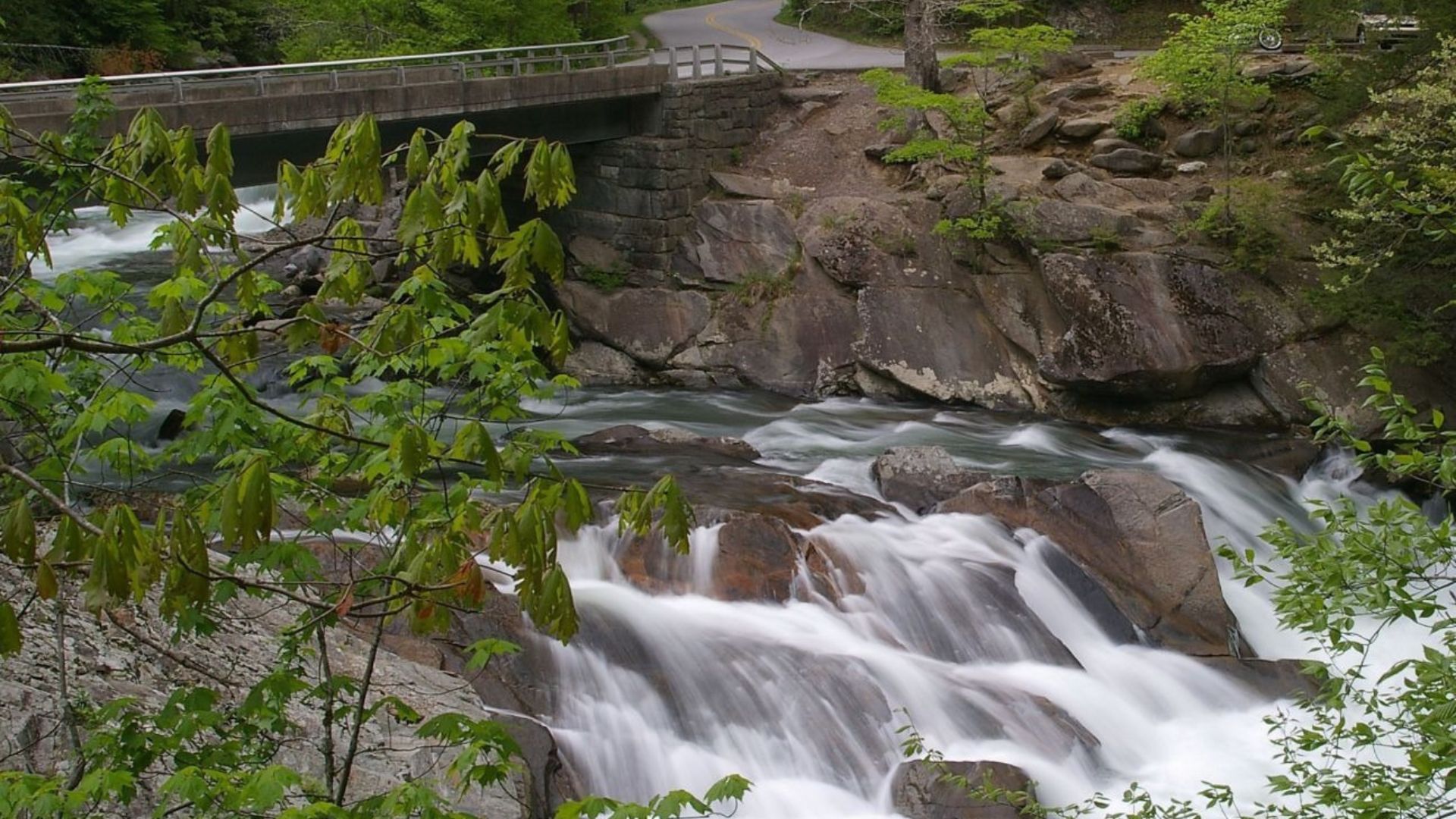
A short, violent waterfall on Little River Road where the whole river funnels through a narrow gap and drops into a churning pool. It's one of the most dramatic stops in the park, and one of the most dangerous.
The pool below the falls recirculates. Water pushed down by the drop is forced back upstream along the bottom, which creates a current that pulls swimmers under and holds them there. It has drowned people, including strong swimmers and experienced adults.
The rocks around the falls are wet, sloped, and slick with algae. People have slipped from them into the water. Jumping from the rocks — which people still do — is how several of the fatalities happened.
Look at it. Photograph it. Stay out of the water and keep children well back from the edge.
What you're looking at
The Little River narrows sharply here and drops over a rock ledge into a deep pool. It isn't tall — the power is in the volume and the constriction rather than the height. After heavy rain the whole thing becomes genuinely thunderous.
Large boulders, steep banks, and dense forest surround it. The viewing area is a few steps from the parking lot, which is what makes it one of the easiest dramatic stops in the park.
How it got this way
The falls aren't entirely natural. In the logging era of the early 1900s, crews blasted the riverbed here to move timber downstream more easily. The blast altered the channel and concentrated the flow into what you see now.
The name is thought to come from the sinking, swirling motion of the water in the pool — which is also, precisely, the thing that makes it dangerous.
Visiting
- On Little River Road between Sugarlands and Townsend, part of one of the park's better scenic drives
- A parking tag is required for any vehicle parked over fifteen minutes. Buy at recreation.gov beforehand
- The lot is small and fills fast in summer and autumn. Early or late is easier
- The viewing area is steps from the car, so it works as a five-minute stop
- Best after rain, when the volume is at its most impressive
Photography
It's one of the most photographed spots on Little River Road, and it rewards a tripod. A long exposure smooths the water into a silk sheet against the dark rock, which is the shot everyone comes for.
Early morning and late afternoon give the softest light. Overcast days actually work better than bright sun here — the contrast between white water and dark rock is easier to hold.
Get the shot from the viewing area. Every year people climb onto wet rock for a better angle, and the rock is the reason some of them don't come back.
Meigs Creek Trail
The trailhead is at The Sinks parking area — about 3.5 miles round trip through forest with several creek crossings and a waterfall at the end.
The crossings are the thing to know: they're unbridged, and after rain they can be difficult or impassable. Waterproof boots or a spare pair of shoes make it considerably more pleasant.
More options on our Smoky Mountain trails guide.
Nearby on Little River Road
- Metcalf Bottoms picnic area — riverside tables, and the easiest lunch stop on this road
- Laurel Falls — the most popular family waterfall walk in the park. Check current trail status
- Cades Cove — the road continues west toward Townsend and the Cades Cove entrance
- Sugarlands Visitor Center — at the eastern end, where you can buy a parking tag in person
Frequently asked questions
Can you swim at The Sinks?
No. The recirculating current below the falls has drowned people. The Park Service advises visitors to stay out of the water entirely, and that advice exists because of a real history of fatalities here.
Why is it so dangerous?
Water falling into the pool is pushed back upstream along the bottom, creating a hydraulic that pulls swimmers under and holds them. It isn't visible from the surface, which is why people misjudge it.
Where is it?
On Little River Road between the Sugarlands Visitor Center and Townsend, with a parking area right at the falls.
Do I need a parking pass?
Yes, for any vehicle parked over fifteen minutes. Buy in advance at recreation.gov.
How long should I stop?
Five minutes if you're passing, twenty if you're photographing it. The viewing area is a few steps from the car.
Is it worth stopping with kids?
It's genuinely impressive to look at, but keep them close and well back from the edge — the rocks are slick and the drop is immediate. For water they can actually get into, ask about cabins on a creek instead.
What's the hike from the parking area?
Meigs Creek Trail, about 3.5 miles round trip, with unbridged creek crossings that can be difficult after rain.
If you want water the family can actually swim in, a cabin creek or a private pool is the safe version. See cabins on the river, cabins with a private pool, and cabins with pool access. Browse by area: Gatlinburg, Pigeon Forge, Wears Valley. Check the current specials, or use the vacation planner.