4 Beginner-Friendly Hikes in the Smoky Mountains
Published Aug 5, 2025
Great Smoky Mountains National Park has over 800 miles of trails — and some of the best ones are the shortest. These four beginner-friendly hikes are genuinely rewarding for first-timers: waterfalls you can walk behind, ghost towns, old-growth forest, and a river trail that ends in downtown Gatlinburg.
Before You Go
A few things apply to every hike in the park. A $5 daily parking tag is required for any vehicle parked more than 15 minutes inside the park boundary — buy in advance at recreation.gov and print before leaving the cabin. Phone images are not accepted. Check nps.gov/grsm for current trail conditions before heading out — Smoky Mountain weather moves fast, and a trail that was dry yesterday can be muddy or flooded today.
Wear closed-toe shoes with grip — trail surfaces are often uneven, rooted, and wet near stream crossings. Bring more water than you think you need, sunscreen for open sections, and layers. Mountain temperatures at elevation drop quickly in the afternoon even in summer. And tell someone where you're going and when you expect to be back.
Dogs: Only two trails in Great Smoky Mountains National Park allow dogs — the Gatlinburg Trail and the Oconaluftee River Trail (NC side). Dogs are not permitted on any other park trails. Browse pet-friendly cabins and plan your dog's day accordingly.
1. Gatlinburg Trail
Trailhead: Sugarlands Visitor Center, 1420 Fighting Creek Gap Rd. | 3.8 miles round-trip | Rated easy | Paved and unpaved sections | Dogs and bicycles permitted | $5 parking tag required at Sugarlands
The Gatlinburg Trail begins at the Sugarlands Visitor Center and follows the West Prong of the Little Pigeon River downstream into downtown Gatlinburg — one of only two trails in the entire park where dogs and bicycles are allowed. The trail is mostly flat, following the river through mixed forest with occasional open meadow sections. It crosses the river twice on footbridges and passes the remains of a few historic structures from the pre-park era.
The practical appeal is obvious: hike in from Sugarlands, have lunch or coffee in downtown Gatlinburg, and hike back — or arrange a pickup and skip the return. The trail connects to the Gatlinburg Trolley network, so you can ride back to Sugarlands without retracing your steps. It's also one of the best options for visitors who want a genuine national park hike without significant elevation gain, stroller-accessible sections, or dogs in tow. A cabin near the national park puts you minutes from the Sugarlands trailhead.
2. Elkmont Nature Trail
Trailhead: Elkmont Campground, off Little River Road | Loop under 1 mile | Rated easy | Dogs not permitted | $5 parking tag required | Synchronous firefly viewing area (late May–early June, permit required during peak window)
Elkmont was a resort community — first a logging camp, then a private vacation enclave for wealthy Knoxville families — that was gradually abandoned as the national park acquired the land through the mid-20th century. The houses were left standing. By the time the park formalized the historic district, the structures had developed that particular quality of beauty that comes from decay in the woods: rooflines collapsing into rhododendron, porches returning to the forest floor, chimneys standing alone where cabins used to be.
The nature trail loop is less than a mile and winds through this ghost community on a clearly marked path with a wooden footbridge and river views. It's one of the more unusual hikes in the park — less about terrain than about history and atmosphere. Kids respond strongly to the abandoned-resort angle. The same area is the central viewing location for the synchronous firefly display in late May and early June — one of the most sought-after natural events in the Smokies — though that window requires a permit through recreation.gov. For visitors staying in Smoky Mountain cabins near Gatlinburg, Elkmont is about 20 minutes from town.
3. Cove Hardwood Nature Trail
Trailhead: Chimneys Picnic Area, 4.8 miles south of Sugarlands Visitor Center on US-441 | ~0.75-mile loop | Rated easy | Dogs not permitted | $5 parking tag required | Self-guiding brochure available at trailhead
Cove hardwood forest is the most botanically diverse forest type in North America — up to 30 canopy tree species in a single stand, with a dense understory of flowering shrubs and wildflowers. The Cove Hardwood Nature Trail at the Chimneys Picnic Area is one of the most accessible places in the park to experience it: a short loop through old-growth trees including a yellow buckeye over 12 feet in circumference and a sugar maple over 7 feet around. Several small stream crossings add interest without difficulty.
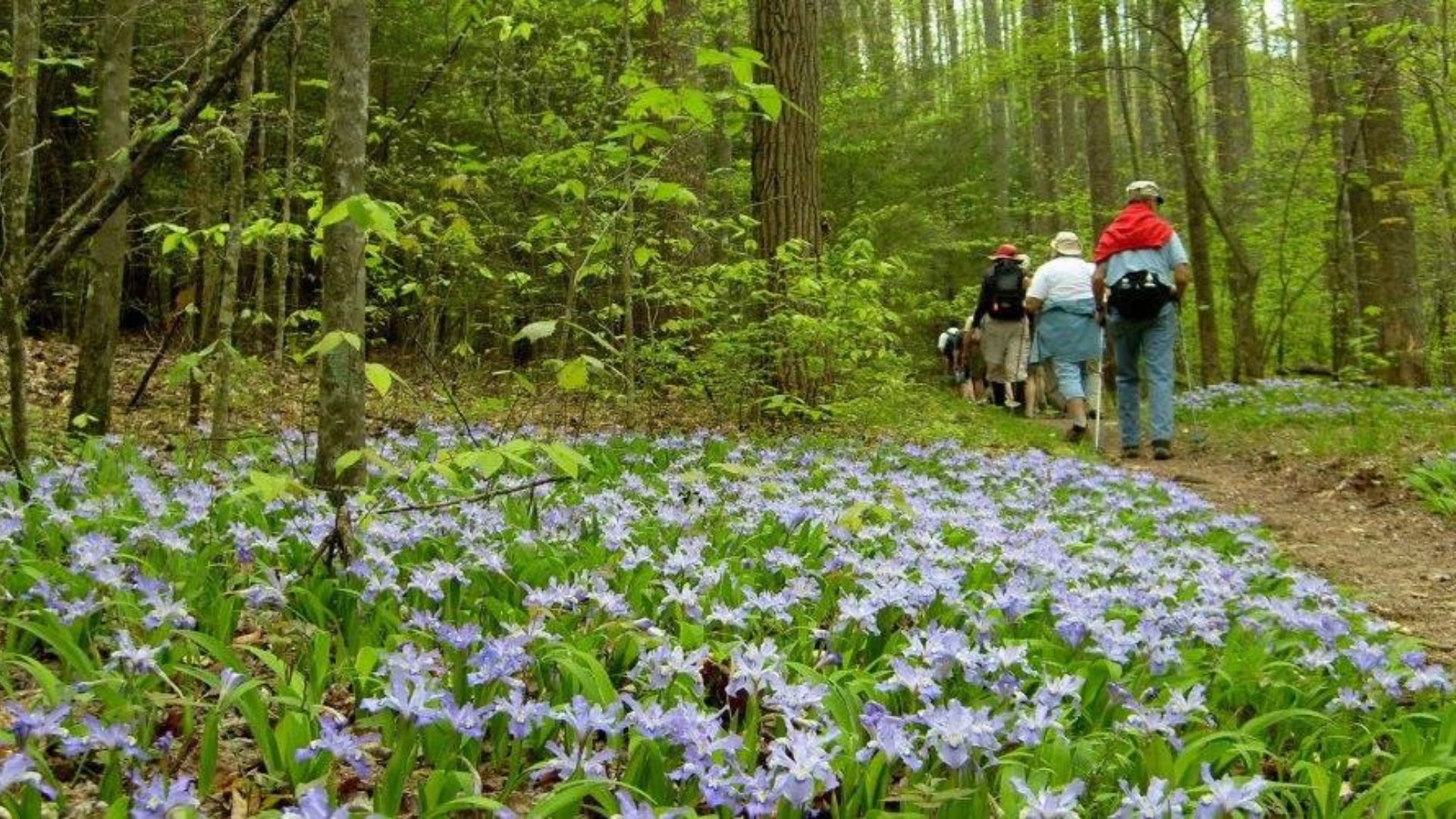
This is the park's best wildflower trail in spring — trillium, bloodroot, hepatica, dwarf iris, and Dutchman's breeches carpet the forest floor from March through May. In summer the canopy provides dense shade, making it one of the cooler short hikes available on hot days. A self-guiding brochure available at the trailhead identifies the major tree species and explains the differences between logged and old-growth sections of the trail — a genuine distinction visible to anyone who looks.
The Chimneys Picnic Area has tables, restrooms, and stream access, making this a natural combination with a picnic stop. Pair it with the Cades Cove loop on the same day if you're making a full park day of it — the picnic area is on Newfound Gap Road, well-positioned for a mid-day stop between the two.
4. Trillium Gap Trail to Grotto Falls
Trailhead: Roaring Fork Motor Nature Trail, off Cherokee Orchard Rd., Gatlinburg | 2.6 miles round-trip | Rated easy-moderate | Multiple stream crossings without bridges | Dogs not permitted | $5 parking tag required | Roaring Fork Motor Nature Trail is seasonal (closed in winter)
Grotto Falls is the only waterfall in Great Smoky Mountains National Park where you can walk directly behind the cascade. The 25-foot falls pour over a rock ledge that juts out far enough to create a natural alcove — you walk through the forest on Trillium Gap Trail, round a bend, and suddenly the trail continues behind a wall of falling water. It's one of those moments that earns its reputation.
The hike is 2.6 miles round-trip through old-growth hemlock forest — one of the largest remaining concentrations of old hemlocks in the park. The trail crosses several small streams without bridges, so expect to hop rocks or wade through ankle-deep water; waterproof shoes or trail sandals with grip are useful here. The trail gains elevation gradually on the way in and is well-maintained throughout. Arrive early — the parking area on Roaring Fork Motor Nature Trail fills quickly on summer weekends, and the falls are noticeably less crowded before 9 AM.
The same trailhead puts you on Roaring Fork Motor Nature Trail, a scenic one-way loop through historic cabins and mountain views that's worth driving before or after the hike. Read more about other great summer spots in the Smoky Mountains →
Your Hiking Home Base
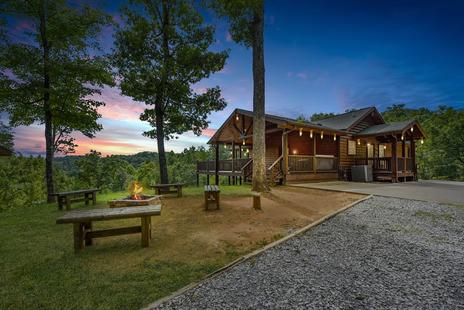
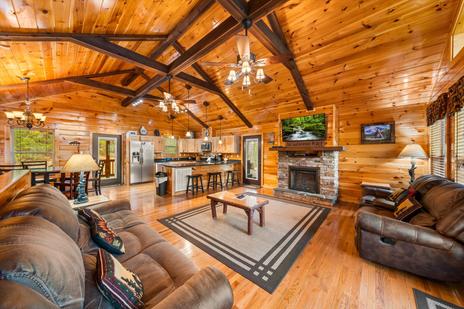
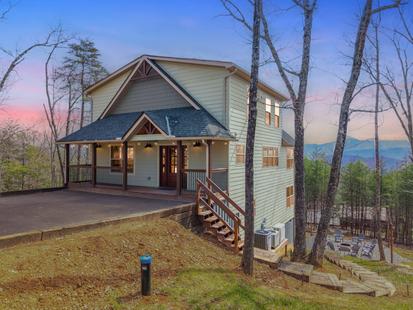
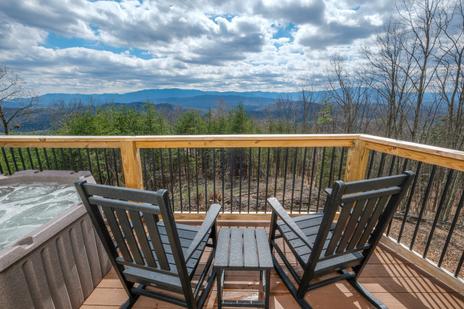
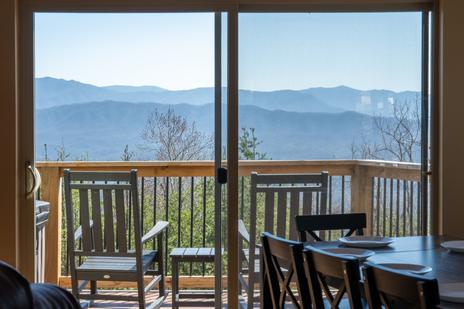
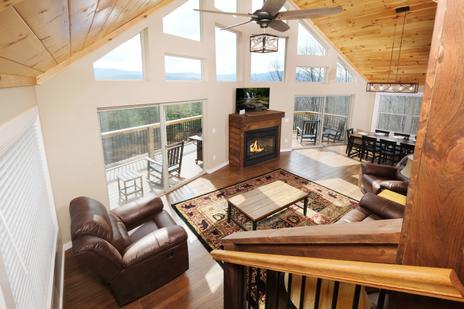
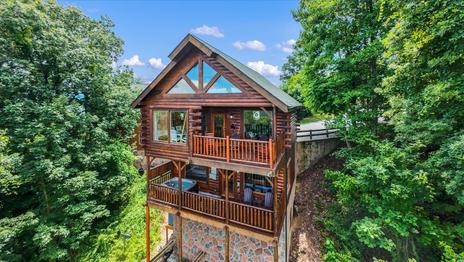
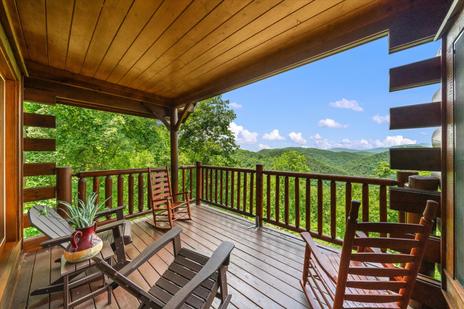
All four of these trails are within 30 minutes of most Gatlinburg cabins. The cabin advantage for hiking is specific: you can leave at sunrise without a long drive, return mid-day during the hottest hours for lunch and a break, and head back out in the afternoon when temperatures drop and crowds thin. After the trail, a cabin with a hot tub has a particular appeal. Browse all cabins near the national park →
Frequently Asked Questions
What are the easiest hikes in Great Smoky Mountains National Park?
The Gatlinburg Trail (3.8 miles, flat, follows the river), Elkmont Nature Trail (under 1 mile loop), and Cove Hardwood Nature Trail (~0.75 miles loop) are among the easiest in the park. Trillium Gap Trail to Grotto Falls (2.6 miles) is easy-moderate and rewards with the only walk-behind waterfall in the park.
Can I bring my dog hiking in the Smoky Mountains?
Dogs are permitted on only two trails in Great Smoky Mountains National Park: the Gatlinburg Trail and the Oconaluftee River Trail (on the NC side). Dogs are not allowed on any other park trails, including Elkmont, Cove Hardwood, and Trillium Gap Trail. Dogs must be on a leash of 6 feet or less at all times in the park. Browse pet-friendly cabins for your stay.
Do I need a parking tag to hike in the Smoky Mountains?
Yes — a $5 daily parking tag is required for any vehicle parked more than 15 minutes inside the national park. Buy in advance at recreation.gov, print it before entering, and display it face-up on the dashboard. Phone images are not accepted. See the full guide: where to buy a GSMNP parking tag →
What waterfall can you walk behind in the Smoky Mountains?
Grotto Falls — reached via Trillium Gap Trail on Roaring Fork Motor Nature Trail near Gatlinburg. It's the only waterfall in Great Smoky Mountains National Park where the trail passes directly behind the cascade. The hike is 2.6 miles round-trip and rated easy-moderate.
What is Elkmont in the Smoky Mountains?
Elkmont is a historic district inside Great Smoky Mountains National Park, site of an early 20th-century resort community whose abandoned cabins and cottages still stand in various states of decay. A short nature trail loop under a mile winds through the area. Elkmont is also the primary viewing site for the annual synchronous firefly display in late May and early June.
When is the best time to hike in the Smoky Mountains?
Early morning (before 9 AM) is the best time on any summer or fall weekend — parking lots fill early and trails are noticeably less crowded in the first few hours after sunrise. Weekdays throughout the season offer significantly lighter traffic than weekends. Spring (March–May) brings wildflowers and cooler temperatures; fall (October) brings foliage crowds but spectacular color.