Top 6 Historical Landmarks in Cades Cove
Published Aug 11, 2025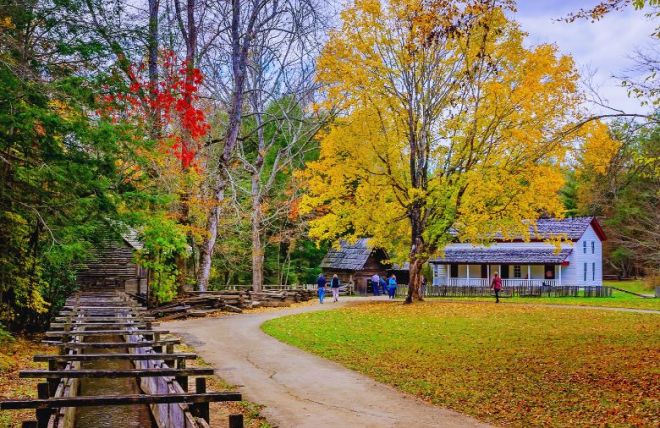
Cades Cove is the most visited area in Great Smoky Mountains National Park — an 11-mile one-way loop through a broad mountain valley that preserves the most complete collection of 19th-century Appalachian homesteads in the eastern United States. The wildlife gets most of the attention, but the history is just as remarkable. Here are the six landmarks that make the loop worth slowing down for.
Before You Go: Loop Road Basics
Cades Cove Loop Road | 11 miles, one-way | Open sunrise to sunset | $5 parking tag required for stops over 15 minutes | Wednesdays May–September: motorcycles and bicycles only (no cars, all day) | Dogs not permitted on hiking trails | nps.gov/grsm for current conditions
The loop road is one-way and 11 miles — plan for two to four hours depending on how often you stop, wildlife activity, and seasonal traffic. It's a popular road and can back up significantly on weekend mornings in summer and fall. Arriving at or shortly after sunrise gives you the best wildlife viewing and the lightest traffic. The $5 parking tag is required at all stops — have one before you go, or pay at the Cades Cove entrance kiosk. Dogs are welcome in the cove on paved roads and in parking areas but are not permitted on any hiking trails.
1. John Oliver Cabin
The first stop on the loop — just past Sparks Lane, a short flat walk from the parking area — is the most visited historic structure in the cove. The hand-hewn log cabin was built by John Oliver in the early 1820s, originally as a honeymoon cabin for his son William. John Oliver was among the first permanent European settlers in Cades Cove, arriving with his wife Lucretia in 1818.
What makes the cabin remarkable is how it's held together: saddle-notched log corners and gravity alone — no nails, no pegs, no metal fasteners of any kind. The logs were hand-hewn with an ax into square lumber, the gaps between them chinked with mud, and the corners locked together with precision-cut notching that has kept the structure upright for two centuries. The cabin is open to walk through and is one of the finest surviving examples of single-pen Appalachian log construction anywhere in the national park system.
2. The Three Churches
Three wooden churches stand along the loop road, each representing a different congregation that served the Cades Cove community in the 19th and early 20th centuries. Churches were the social and spiritual centers of mountain settlement — the place where community news was shared, marriages performed, and the dead were buried.
The Primitive Baptist Church (1827) is the oldest and most visited. Step inside to see the carpenters' handprints still visible in the finish of the wooden ceiling — the marks left by the builders who constructed it. John and Lucretia Oliver are buried in the cemetery directly behind the church, alongside other early Cades Cove families. The Missionary Baptist Church and Methodist Church stand nearby; the Methodist cemetery contains some of the oldest marked graves in the cove. All three churches are open and worth a few minutes of quiet time.
3. Cable Mill
The Cable Mill complex is the largest and most active historic site on the loop — a working 19th-century grist mill, still grinding corn on the same water-powered millstones it used when it was built in the 1870s. The mill was the economic hub of Cades Cove: families brought their corn here to be ground into meal, traded news and goods, and caught up with neighbors they might not see for weeks at a time.
National Park Service volunteers operate the mill on a regular schedule, and watching the millstones turn under waterpower is one of the more memorable experiences in the cove. In fall, volunteers also demonstrate the horse-powered sorghum press — crushing sorghum cane and cooking the juice down to syrup using the same technique settlers used in the 1800s. The Cable Mill area also includes a visitor center, restrooms, and several other preserved structures including a barn and smokehouse. This is the main stopping point mid-loop and a good place to stretch your legs.
4. Henry Whitehead Place
This double cabin has one of the most human stories in the cove. In 1881, Matilda Shields was abandoned by her husband — left alone with children and no shelter. Her brothers built her a small, rough cabin as quickly as they could, giving her a roof over her head. When Matilda later married Henry Whitehead, he built her a larger, beautifully crafted cabin and attached it directly to her original small one rather than replacing it.
The joined result — a precisely finished new structure connected to a crude emergency shelter — tells the full range of Appalachian building technique in one place. The contrast between the two sections is visible from outside: the careful craftsmanship of the Whitehead cabin on one side, and the rough-hewn urgency of the brothers' work on the other. It's one of the more quietly moving stops on the loop.
5. Tipton Place
The Tipton homestead is best known for its cantilevered barn — a structure that appears to be suspended over the ground on stilts, with the upper hay loft extending out over the lower level. The design was widespread in the Smoky Mountains two centuries ago and served multiple practical purposes: the overhang protected stored grain and hay from rain, the covered lower level provided shade and shelter for livestock, and the design allowed wagons to pull directly under the loft for easier loading and unloading.
Cantilevered barns are increasingly rare — most have been lost to time, fire, or neglect — and the Tipton barn is one of the best-preserved examples in the region. The homestead also includes the main cabin and several outbuildings, all in good condition for visitor access.
6. Carter Shields Cabin
Near the end of the loop, the Carter Shields Cabin sits in a quiet clearing with no power line, no paved road, and no modern structure in any direction — just the log cabin, the treeline behind it, and the mountains beyond. It's one of the most photographed spots in the cove precisely because it looks like nothing has changed in 150 years.
The one-room cabin is a classic single-pen log structure, positioned to take advantage of natural light and shelter from the prevailing winds. The surrounding clearing blooms with wildflowers in spring, making this one of the best stops on the loop for both photography and a quiet moment before returning to the Parkway. It's the last major historic stop before the loop road returns to the entrance.
Staying Close to Cades Cove
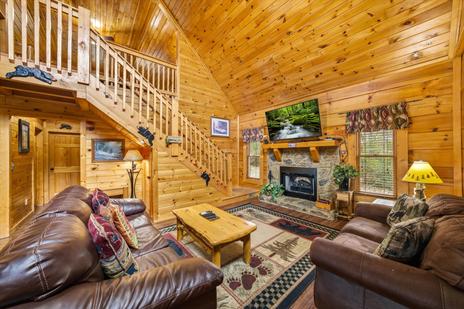
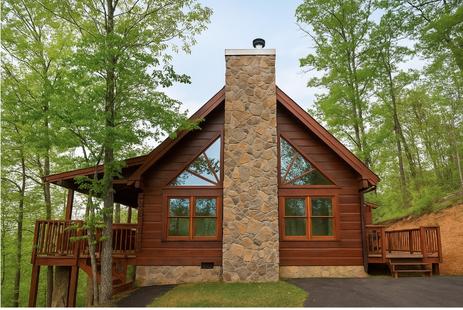
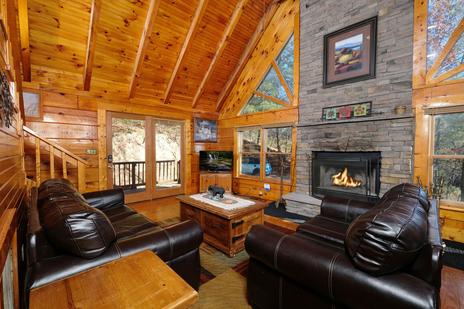
Cades Cove is roughly 25 miles from Gatlinburg and 35 miles from Pigeon Forge — about 45 minutes to an hour from most Smoky Mountain cabins. An early departure from the cabin — sunrise or just after — puts you at the loop entrance at the best time of day for both wildlife and uncrowded roads. Cabins near the national park cut that drive time and make a mid-day return practical. Pet-friendly cabins are worth considering since dogs are welcome in the cove on paved roads — just not on the hiking trails.
Frequently Asked Questions
How long does it take to drive the Cades Cove loop?
Plan for two to four hours depending on stops, wildlife activity, and traffic. The loop is 11 miles and one-way. On busy summer and fall weekends, the loop can back up significantly — arriving at or just after sunrise is the most reliable way to avoid delays and see the most wildlife.
When is Cades Cove closed to cars?
Every Wednesday morning from May through September, the Cades Cove loop road is open only to bicycles and motorcycles — no cars. This is an all-day closure for the day, not just the morning. On all other days the loop is open to vehicles from sunrise to sunset.
Do you need a parking pass for Cades Cove?
Yes — a $5 parking tag is required for stops over 15 minutes anywhere in Great Smoky Mountains National Park, including Cades Cove. Passes can be purchased at the entrance kiosk or in advance at recreation.gov. Vehicles parked for less than 15 minutes are exempt.
Can I bring my dog to Cades Cove?
Dogs are welcome in Cades Cove on paved roads and in parking areas, but are not permitted on any hiking trails. This includes all the foot paths to the historic structures. Keep dogs on a leash of 6 feet or less at all times in the national park.
What wildlife can you see at Cades Cove?
White-tailed deer are the most commonly seen wildlife — large numbers graze the open fields of the cove daily. Black bears are frequently spotted, particularly in spring and fall. Wild turkeys, coyotes, and groundhogs are also common. Early morning and evening are the best times for wildlife viewing. Maintain a minimum 50-yard distance from bears and 25 yards from all other wildlife.
Is the Cable Mill still operating?
Yes — National Park Service volunteers operate the Cable Mill grist mill on a regular schedule, grinding corn on the original water-powered millstones. Check with the Cades Cove Visitor Center or nps.gov/grsm for current operating days and hours, as they vary seasonally.