7 Unforgettable Summer Spots to Explore in the Smoky Mountains
Published Aug 6, 2025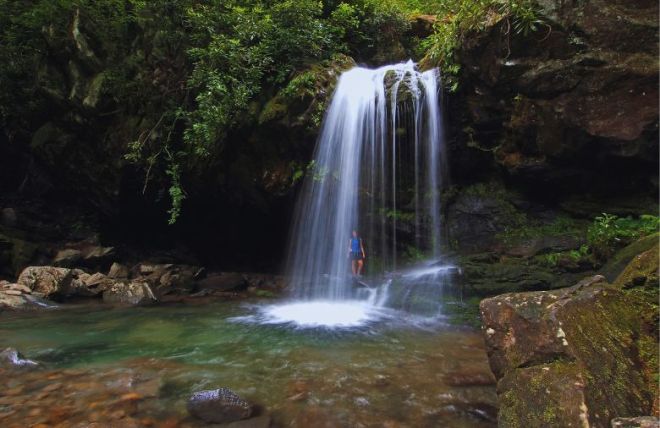
Summer in the Smoky Mountains means long days, cool mountain water, and some of the best outdoor experiences in the eastern United States. These seven spots are worth building your trip around — from swimming holes and waterfall hikes to hidden springhouses and quiet fishing streams.
1. Swimming Holes at Greenbrier, Townsend Wye, and Metcalf Bottoms
$5 parking tag required for stops over 15 minutes | Arrive early on summer weekends — lots fill fast | Inner tubes welcome | Check nps.gov/grsm for current swimming conditions
Three of the park's most popular swimming spots offer clear, cold mountain water even in peak summer heat. Greenbrier Cove on the Middle Prong of the Little Pigeon River sits off East Parkway east of Gatlinburg — a shaded stretch of boulders and deep pools that draws a steady crowd. Townsend Wye is where the Little River forks near the Townsend entrance, a wide, shallow stretch ideal for families with small children. Metcalf Bottoms on Little River Road combines a picnic area with easy river access — bring the inner tubes and plan to stay a while.
Mountain water runs cold even in July and August — plan to wade in gradually rather than dive in. The park does not lifeguard any swimming areas. Sandals with grip are more useful than bare feet on the mossy rocks.
2. Fishing Streams
Tennessee fishing license required for visitors 13 and older | Park fishing regulations apply — check nps.gov/grsm | Children's catch-and-release streams in Gatlinburg at Mynatt Park and along the Gatlinburg Trail | $5 parking tag required
Great Smoky Mountains National Park contains nearly 3,000 miles of rivers and streams, and the trout fishing in those waters is among the best in the Southeast. Wild brook, brown, and rainbow trout inhabit the park's cold-water streams throughout the summer season. A Tennessee fishing license is required for visitors 13 and older; the park has its own regulations that differ from state rules, so check the current park fishing guidelines at nps.gov/grsm before heading out.
For younger anglers, Gatlinburg maintains designated children's catch-and-release fishing areas at Mynatt Park and along the Gatlinburg Trail — stocked streams where kids can fish without a license and learn the basics in a managed setting.
3. Park Picnic Areas
11 picnic areas across the park | Tables at all locations | Some sites have grills and group pavilions | $5 parking tag required | Metcalf Bottoms and Chimney Tops Picnic Area are the most popular summer spots
The park has eleven designated picnic areas ranging from small riverside clearings to large facilities with pavilions and grills. Metcalf Bottoms on Little River Road is the most popular in summer — riverside tables, easy swimming access, and one of the more reliably shaded settings in the park. The Chimney Tops Picnic Area sits on a clear mountain stream with views of the ridgeline above. For quieter options, Cosby Picnic Area on the eastern end of the park draws fewer visitors than the western and central sections and offers the same quality of setting.
Group pavilions at some areas can be reserved through recreation.gov in advance — worth doing for large family gatherings during peak summer weeks when day-use spots fill by mid-morning.
4. The House of the Fairies
Twin Creeks Trail, off Cherokee Orchard Rd., Gatlinburg | Park at Ogle Place or Mynatt Park | 4.5 miles round-trip full trail, or shorter via Twin Creeks parking area shortcut | $5 parking tag required
About a mile from Gatlinburg off Cherokee Orchard Road, the Twin Creeks area of the national park contains a hidden moss-covered stone springhouse that hikers have nicknamed the House of the Fairies. The structure was built in the 1930s by Louis Voorheis, a wealthy Northerner who purchased 38 acres of mountain land and developed it with water-powered mills, gardens, and a pool. The park eventually acquired the property, and while most of the estate has returned to forest, the stone springhouse remains intact — its arched doorway and moss-covered walls look, genuinely, like something out of a storybook.
To reach it, hike the Twin Creeks Trail and watch for the small path that branches off just after the Resource Center — follow it to the springhouse. You can enter and explore the stone interior. A shorter route via the Twin Creeks public parking area cuts the distance significantly. This is one of the better hidden gems in the park for families with kids who enjoy a good story about where they're going.
5. Cades Cove
11-mile one-way loop | Open sunrise to sunset | Wednesdays May–September: bicycles and motorcycles only (no cars) | $5 parking tag required | Dogs not permitted on hiking trails | Horseback rides at Cades Cove Riding Stables (seasonal)
Cades Cove is the most visited area in the national park — a broad mountain valley with an 11-mile loop road, preserved 19th-century homesteads, working grist mill, and consistent wildlife viewing throughout the year. Summer brings long days and active wildlife, with deer in the open fields at dawn and dusk, wild turkeys throughout the day, and bears appearing regularly enough that slow-moving traffic jams for bear sightings are a genuine summer phenomenon.
Horseback rides are available at the Cades Cove Riding Stables during summer season. The nature trail near the Cable Mill is flat and short — good for families who want a walking stop between driving the loop. Read more about the six historical landmarks worth stopping for on the Cades Cove loop →
6. Grotto Falls
Trillium Gap Trailhead, Roaring Fork Motor Nature Trail | 2.6 miles round-trip | Rated easy-moderate | $5 parking tag required | Roaring Fork Motor Nature Trail is seasonal (closed in winter) | Dogs not permitted on trail
Grotto Falls is the only waterfall in Great Smoky Mountains National Park where you can walk directly behind the cascade — a 25-foot drop that creates a natural alcove behind the curtain of falling water. The hike in follows the Trillium Gap Trail through old-growth hemlock forest (2.6 miles round-trip, rated easy-moderate), passing one of the largest concentrations of old hemlocks remaining in the park before arriving at the falls. Summer is the best season for water volume, the hemlock canopy keeps the trail shaded and cool, and the pool at the base of the falls is a popular wading spot after the hike.
The trailhead is on Roaring Fork Motor Nature Trail, accessible from Cherokee Orchard Road in Gatlinburg. The motor nature trail is seasonal — open spring through fall — and is a worthwhile drive on its own with multiple overlooks and historic structures along the way.
7. Laurel Falls
Laurel Falls Trailhead, Little River Road | 2.6 miles round-trip | Paved trail | $5 parking tag required | Arrive before 9 AM on summer weekends — parking lot fills early | Dogs not permitted on trail
Laurel Falls is the most visited waterfall in Great Smoky Mountains National Park — a 75-foot two-tiered cascade on a paved trail that makes it one of the more accessible waterfall hikes in the region. The paved surface runs 1.3 miles each way through mountain laurel and hardwood forest; it's wide enough for most strollers and accessible for visitors who can't do unpaved terrain.
The tradeoff for accessibility is popularity: the Laurel Falls parking lot fills by 9–10 AM on summer weekends without exception. The best strategy is an early departure from your Gatlinburg cabin — arriving at or just after sunrise gives you the falls largely to yourself and a parking spot without circling. Mid-morning through afternoon, expect a full lot and a trail with steady foot traffic in both directions. The falls themselves are worth it regardless — the upper and lower tiers form a natural pool at the base that draws hikers to linger.
Planning Your Visit
A $5 daily parking tag is required for any vehicle stopped more than 15 minutes inside Great Smoky Mountains National Park. Buy in advance at recreation.gov — print it before you leave the cabin and place it face-up on your dashboard. Phone images are not accepted. Read the full guide to where to buy a GSMNP parking tag →
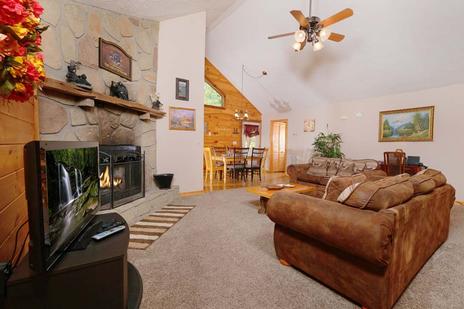
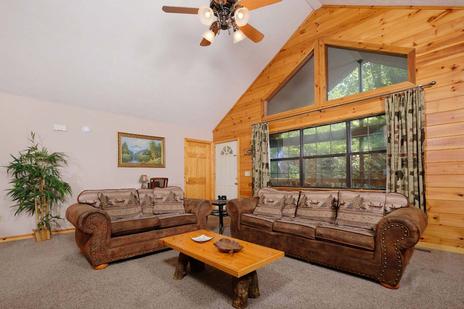
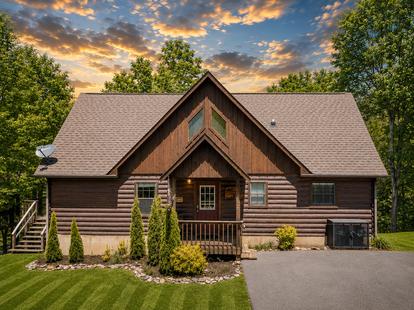
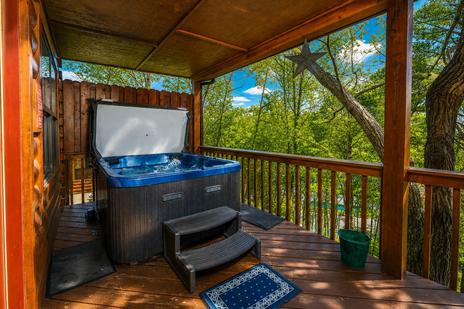
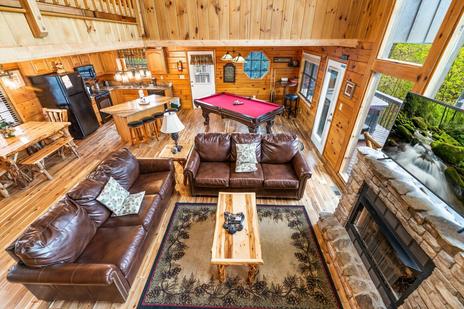
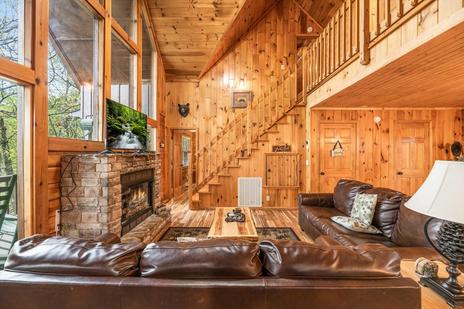
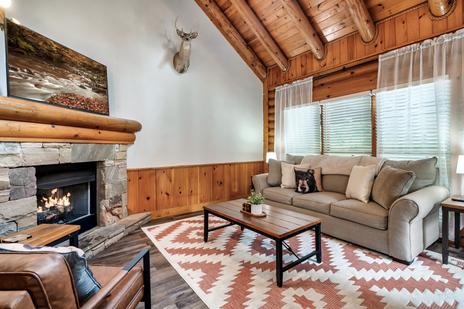
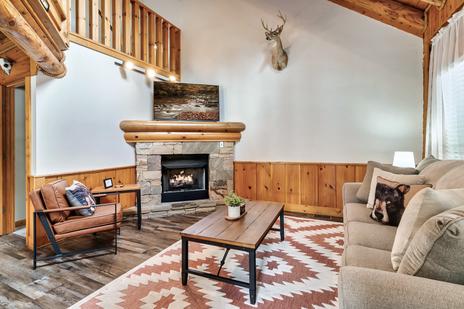
Staying in a cabin near the national park puts you 10–15 minutes from most of these spots — close enough to arrive at first light before crowds build and return mid-day for a break before going back out in the evening. Pet-friendly cabins are worth considering since dogs are welcome on the loop roads and in parking areas (though not on hiking trails).
Frequently Asked Questions
Where are the best swimming holes in the Smoky Mountains?
The top swimming spots in Great Smoky Mountains National Park are Greenbrier Cove, Townsend Wye, and Metcalf Bottoms. All three offer cold, clear mountain water and are accessible with a $5 parking tag. Arrive early on summer weekends — lots fill by mid-morning at peak season.
What is the House of the Fairies in the Smoky Mountains?
The House of the Fairies is a moss-covered stone springhouse built in the 1930s on the former Voorheis Estate, now inside Great Smoky Mountains National Park near Gatlinburg. It's reached via the Twin Creeks Trail off Cherokee Orchard Road — watch for the small path branching off just past the Resource Center. You can enter the stone structure and explore the interior.
Can you walk behind Grotto Falls?
Yes — Grotto Falls is the only waterfall in Great Smoky Mountains National Park where you can walk directly behind the cascade. The hike in is 2.6 miles round-trip via Trillium Gap Trail on Roaring Fork Motor Nature Trail. The trail is open in summer and closed in winter when the motor nature trail closes.
What is the most visited waterfall in the Smoky Mountains?
Laurel Falls is the most visited waterfall in Great Smoky Mountains National Park. It's a 75-foot two-tiered waterfall on a paved 2.6-mile round-trip trail on Little River Road. The parking lot fills early on summer weekends — arrive before 9 AM for the best chance of a spot.
Do you need a parking tag to visit these spots?
Yes — all of these spots are inside Great Smoky Mountains National Park and require a $5 daily parking tag for stops over 15 minutes. Buy in advance at recreation.gov and print it before entering the park — phone images are not accepted.
Can I bring my dog to these spots?
Dogs are welcome on paved roads and in parking areas throughout the national park, but are not permitted on any hiking trails, including Grotto Falls (Trillium Gap Trail) and Laurel Falls. Dogs are allowed on the Cades Cove loop road and in the parking areas there. Keep dogs on a 6-foot leash at all times in the park.