A Field Guide to Salamanders in the Smokies, the Salamander Capital of the World
Published Sep 8, 2026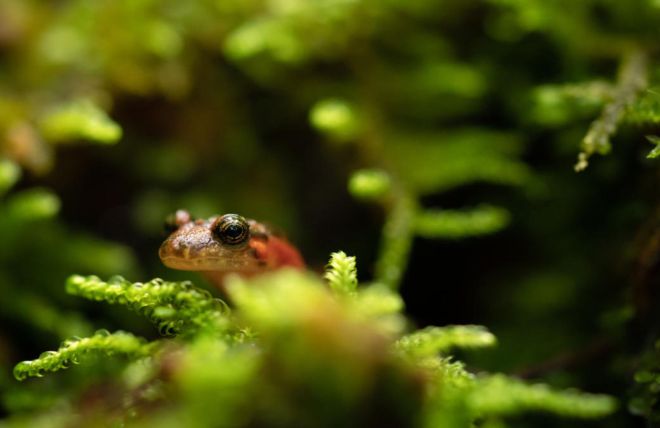
The Great Smoky Mountains are famous for black bears, elk, and synchronous fireflies — but the animal that truly sets this park apart is one most visitors never notice. Great Smoky Mountains National Park is known as the "Salamander Capital of the World," home to a greater diversity of salamanders than anywhere else of similar size on Earth. There are so many of them that, by weight, the park's salamanders are thought to outweigh every mammal in the park combined. Here's your field guide to the Smokies' most remarkable — and most overlooked — residents.
- Species: around 30, across five taxonomic families
- Lungless species: about 24 — they breathe through their skin
- Found only here: the Jordan's Red-cheeked Salamander, endemic to the park's high elevations
- Largest: the Eastern Hellbender, up to ~2.5 feet — the largest salamander in North America
- Smallest: the Pygmy Salamander, around 1.5–2.5 inches
- Best time to spot them: after rain, spring through fall, near streams and on the damp forest floor
Why the Smokies are the salamander capital of the world
It comes down to a rare combination of climate, geology, and age. The Smokies are among the oldest mountains on Earth — 200 to 300 million years old, predating the dinosaurs — which has given life here an extraordinarily long time to diversify. Layer on the park's more than 2,900 miles of streams, its dense old-growth forest, its wide range of elevations, and the near-constant moisture from the famous "smoke" (fog and humidity), and you get the ideal salamander habitat: cool, wet, shaded, and remarkably stable across the seasons.
That combination allowed one group in particular to flourish — the lungless salamanders, which underwent such an explosion of evolutionary diversification here that the park now holds about 24 lungless species alone. Salamanders became so successful in this environment that they occupy nearly every moist niche in the park, from mountaintop spruce-fir forests to valley-floor creeks.
The lungless wonder: how skin-breathing works
Most of the Smokies' salamanders belong to the family Plethodontidae — the lungless salamanders — and they pull off something genuinely strange: they have no lungs at all. Instead, they absorb oxygen directly through their skin and the lining of their mouth and throat, a process called cutaneous respiration. For it to work, their skin must stay constantly moist, which is exactly why the perpetually damp Smokies suit them so perfectly.
This same adaptation makes them one of the best natural indicators of ecosystem health anywhere. Because they breathe through their skin, lungless salamanders are exquisitely sensitive to pollution, temperature change, and habitat disturbance — a thriving salamander population is a sign of a genuinely healthy forest, which is part of why researchers monitor them so closely.
Six salamanders to know
Jordan's Red-cheeked Salamander
Plethodon jordani
The park's celebrity — found in the high elevations of the Great Smoky Mountains and nowhere else on Earth. Mostly black with distinctive red or orange patches on its cheeks, it grows to about 3.5–5 inches. Being lungless, it breathes through its skin, and it has a remarkable defense: its tail can detach and wriggle on its own to distract a predator while the salamander escapes, later regrowing. Look for it on the moist forest floor at higher elevations, especially along the spruce-fir trails near the crest of the mountains.
Eastern Hellbender
Cryptobranchus alleganiensis
The giant. The Eastern Hellbender is the largest salamander in North America, reaching up to roughly 2.5 feet long, with a flat body, a rudder-like tail, and loose folds of skin along its sides that help it absorb oxygen from fast-flowing water. Fully aquatic, it spends its entire life in clean, cool, well-oxygenated streams, hiding under large rocks by day and hunting crayfish and small fish by night. Hellbenders are rare, protected, and a genuine indicator species — their presence signals exceptionally clean water. You're unlikely to see one casually, which makes a sighting a real event.
Pygmy Salamander
Desmognathus wrighti
The tiniest of them all, at just 1.5 to 2.5 inches — one of the smallest salamanders in North America. Dark red or bronze with a coppery stripe and a short, rounded tail, the pygmy is a high-elevation specialist, found in the moist spruce-fir forests near the mountaintops, often under logs and bark. Its defense is stillness: it freezes to avoid detection by snakes, beetles, and larger salamanders.
Spotted Salamander
Ambystoma maculatum
One of the most striking and recognizable — a stout, glossy black salamander with two irregular rows of bright yellow spots running down its back, growing to 6–9 inches. Unlike the lungless species, the spotted salamander does have lungs. It spends most of the year underground and is most visible during the first warm rains of late winter and early spring, when large numbers migrate to breed in vernal (temporary) pools.
Red Salamander
Pseudotriton ruber
A vivid orange-red salamander flecked with irregular black spots, reaching 4–7 inches. Found near cool springs, seeps, and streams, the bright coloration is thought to mimic the toxic red eft (the land stage of the eastern newt), discouraging predators. Younger individuals are the most vividly colored; they darken with age.
Blackbelly / Dusky Salamanders
Desmognathus spp.
The dusky salamanders are the ones you're statistically most likely to encounter — a group of several closely related lungless species that are among the most abundant in the park, living right along the edges of streams and seeps. Brown to gray with mottled patterning, they're superbly camouflaged against wet rock and leaf litter. The Blackbelly Salamander is the largest of the group and a strong swimmer, often found in and beside fast-moving mountain streams.
Where and when to find them
Salamanders live throughout the park, but a few habitats reliably concentrate them:
- Waterfall trails — the spray zones and wet rocks around waterfalls are prime habitat. Abrams Falls (in Cades Cove) and Grotto Falls (on the Roaring Fork Motor Nature Trail) are two of the best and most accessible spots.
- Stream edges — anywhere a trail follows a creek, check the wet rocks and leaf litter at the water's edge, where dusky salamanders are common.
- High-elevation spruce-fir forest — the trails near the crest of the mountains, including the Spruce-Fir Nature Trail off Clingmans Dome Road, are where the Jordan's Red-cheeked and Pygmy salamanders live.
- The damp forest floor after rain — the single best time to look. A warm, wet evening or the hours just after a rainstorm brings salamanders out across the whole park.
Best season: spring through fall, with the warm rains of spring being especially productive. Salamanders are most active at night and in wet, overcast conditions — a bright, dry afternoon is the worst time to look.
How to look for salamanders responsibly
Salamanders are delicate, and their skin — the same skin they breathe through — is easily harmed. A little care keeps them safe and keeps the population healthy for the next curious visitor.
- Look, don't handle. The oils, lotions, sunscreen, and bug spray on human hands can injure a salamander's porous skin. Observe them in place rather than picking them up.
- If you turn a rock or log, put it back exactly as you found it. That damp spot underneath is a salamander's home and its moisture supply. Gently return every rock and log to its original position.
- Stay on the trail and out of the streambeds where possible. Trampling stream edges destroys the microhabitats salamanders depend on.
- Never collect them. Removing any plant or animal from the national park is illegal — and the endemic species literally exist nowhere else.
For more on treading lightly in the park, see our guide to the Smoky Mountains as a nature destination.
Salamander-spotting with kids
Salamander hunting is one of the best free, hands-on nature activities in the Smokies for families — a genuine treasure hunt with a living payoff. Kids who might tune out on a scenic hike lock in completely when there's a chance of finding something under the next wet rock. A few tips for a family salamander walk:
- Go right after rain, in the morning or evening, near a stream.
- Bring a small flashlight for peering into shaded crevices and under overhangs.
- Make "look, don't touch" and "put the rock back" the two rules from the start — it turns into a good lesson in how to treat wild things.
- Pair it with an easy waterfall hike like Grotto Falls so there's a scenic reward built in.
It also pairs naturally with the park's other family wildlife experiences — see our guides to the animals you'll see in Cades Cove and the famous Elkmont synchronous fireflies.
Frequently asked questions
Why is the Smoky Mountains called the Salamander Capital of the World?
Great Smoky Mountains National Park has a higher diversity of salamanders than anywhere else of comparable size on Earth — around 30 species across five families, including about 24 lungless species. The park's cool, wet, forested, and geologically ancient environment created ideal conditions for salamanders to diversify, earning it the title.
How many salamander species are in the Smoky Mountains?
Around 30 species, across five taxonomic families. About 24 of them are lungless salamanders that breathe through their skin. One, the Jordan's Red-cheeked Salamander, is found only in the high elevations of the park and nowhere else on Earth.
What is the largest salamander in the Smokies?
The Eastern Hellbender, which can reach up to about 2.5 feet in length — the largest salamander in North America. It's fully aquatic, lives in clean fast-flowing streams, and is rare and protected, so a sighting is uncommon.
Where can I see salamanders in the Smoky Mountains?
Waterfall trails like Abrams Falls and Grotto Falls, stream edges throughout the park, and high-elevation spruce-fir trails are the best spots. The single best time is after rain, spring through fall, when salamanders come out across the damp forest floor.
Can you touch salamanders in the national park?
It's strongly discouraged, and collecting them is illegal. Salamanders breathe through their skin, and the oils, lotions, sunscreen, and insect repellent on human hands can harm them. Observe them in place, and if you lift a rock or log to look, return it exactly as you found it.
Are salamanders in the Smokies dangerous?
No — Smoky Mountain salamanders are harmless to people. Some produce mild skin toxins as a defense against predators, which is another good reason not to handle them, but they pose no threat to humans who simply observe them.
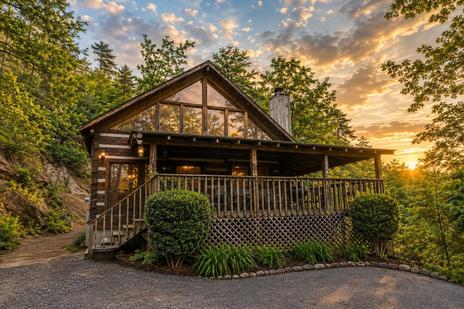
Base your salamander-hunting adventure in a cabin near the streams and trails where they live. Browse Colonial Properties' cabins near the national park — many sit right on the water salamanders call home.