7 Hidden Treasures of the Great Smoky Mountains National Park
Published Nov 23, 2023
Great Smoky Mountains National Park draws over twelve million visitors a year — most of them concentrated at Laurel Falls, Cades Cove, and the Clingmans Dome road. These seven spots sit just far enough off the main visitor routes to stay genuinely quiet, even at peak season.
Alum Cave Bluffs
Alum Cave Trail to the Bluffs is a 4.4-mile round trip on one of the park's most geologically distinct trails — the path passes through Arch Rock, a natural tunnel in the cliff face, before opening into a deep mountain drainage basin where sulphur springs and exposed cliff faces create a landscape that feels unlike anywhere else in the Smokies. The Bluffs themselves are a dramatic concave cliff formation with a shallow overhang that shelters the trail beneath it. The alum and epsom salts that seep from the rock face have been harvested since the Civil War era. The full trail continues to the summit of LeConte (an additional 5 miles round trip from the Bluffs), but the Bluffs alone justify the hike. Dogs are not permitted on this trail.
Ramsey Cascades
Ramsey Cascades is the tallest waterfall in Great Smoky Mountains National Park at approximately 100 feet — yet it remains one of the least-visited major waterfalls in the Smokies because the 8-mile round trip keeps casual visitors away. The hike passes through old-growth forest with trees several feet in diameter — tulip poplars, hemlocks, and yellow birches that pre-date European settlement of the area. The final approach to the falls involves boulder scrambling over the stream, and the waterfall itself fills a grotto-like amphitheater of exposed rock. Spring snowmelt produces the most dramatic volume; fall light through the old-growth canopy makes the forest component of the hike its own reward. Plan a full day. Dogs are not permitted.
The House of the Fairies
The House of the Fairies is a stone springhouse built in the early 1900s as part of the former Levi Trentham estate, tucked into the Twin Creeks area of the park. The structure is small — roughly the size of a large garden shed — with a low stone arch entrance through which a spring runs continuously. The effect of the moss-covered stonework, the flowing water, and the dense forest surrounding it is striking enough that the name has stuck across generations of park visitors. The hike to reach it is short (roughly 2 miles round trip on the Twin Creeks Trail accessed from Cherokee Orchard Road) and makes a good half-morning outing. Our full guide to the House of the Fairies covers the trailhead directions in detail.
Spruce Flats Falls
Spruce Flats Falls near the Great Smoky Mountains Institute at Tremont is one of the park's genuinely lesser-known waterfalls — a three-tiered cascade dropping approximately 30 feet through a mossy rock garden in a dense hemlock and rhododendron setting. The trail from Tremont runs about 3 miles round trip and gains relatively little elevation, making it accessible for most hikers. The Tremont area of the park, on the Little River corridor in the western section, sees a fraction of the eastern-entrance visitor volume — trailhead parking is rarely an issue and the surrounding forest is consistently quiet. The waterfall is most photogenic in morning light; the surrounding rhododendron blooms in late May and early June add a dramatic seasonal element.
Mingus Mill
Mingus Mill sits a half-mile north of the Oconaluftee Visitor Center on the North Carolina side of the park — close enough to the main visitor corridor that it should be crowded, but consistently overlooked by visitors focused on the visitor center exhibits. The mill was built in 1886 and is one of the most intact historic grist mills in the park, still capable of operating with its original turbine-driven mechanism rather than a traditional water wheel. Rangers and volunteers demonstrate the grinding process during the mill's operational season from mid-March through Thanksgiving. The millrace that channels water from Mingus Creek to the turbine is visible and impressive. Admission is free; the surrounding meadow is a good lunch stop.
Little Greenbrier School
The Little Greenbrier School is a one-room schoolhouse from the early 1900s preserved on the Wear Cove Gap Road in the northwestern section of the park — a simple, weathered wooden building with split-log benches and a chalkboard that illustrates what education looked like for Appalachian mountain children before the park's establishment. The structure sits in a quiet roadside clearing that most visitors pass without stopping. It's accessible by car with a short walk from the road, making it suitable for all ages and mobility levels. The adjacent cemetery adds historical context about the families who farmed and lived in this part of the Smokies before relocation. The Little Greenbrier area also provides access to the Cucumber Gap and Little Brier Gap trails for those wanting to extend the visit.
Porters Creek Trail
Porters Creek Trail in the Greenbrier area is one of the best spring wildflower hikes in the park — and one of the less-crowded ones despite the quality of the display. The 4-mile round trip passes through some of the densest trillium and phacelia habitat in the Smokies, with the bloom typically peaking in mid-April. The trail also passes a restored historic farm complex including a barn and the Ownby Cemetery, adding historical depth to what would otherwise be a pure wildflower walk. The Greenbrier area is accessed via Greenbrier Road off Highway 321 near Gatlinburg — it's a narrow road that can surprise drivers expecting a standard park entrance. The trailhead parking area is small; arrive early during peak wildflower season. See our broader waterfall guide for more Greenbrier-area hikes.
Frequently asked questions
Do I need a permit for these trails?
No permit is required for day hiking on any of these trails. Some popular trailheads including Alum Cave require a timed entry parking pass during peak season (available through recreation.gov). Ramsey Cascades and Porters Creek typically do not require parking passes but fill early on peak weekends. Arrive before 9 AM during summer and fall foliage season to secure parking at any of these trailheads.
Are any of these accessible for children or beginners?
The House of the Fairies and Little Greenbrier School are the most accessible — short distances, low elevation gain, and road access. Porters Creek Trail is the best option for families with children who can manage a 4-mile round trip; the wildflower scenery rewards even younger hikers who aren't motivated by summit goals. Spruce Flats Falls is a manageable moderate hike for older children. Ramsey Cascades is strenuous and best suited for experienced hikers.
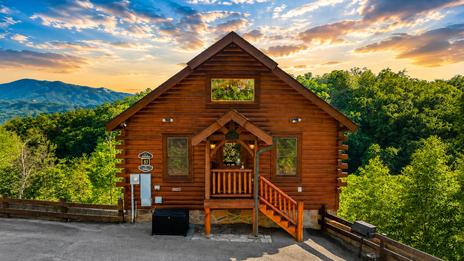
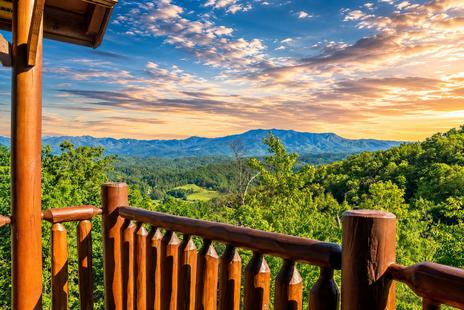
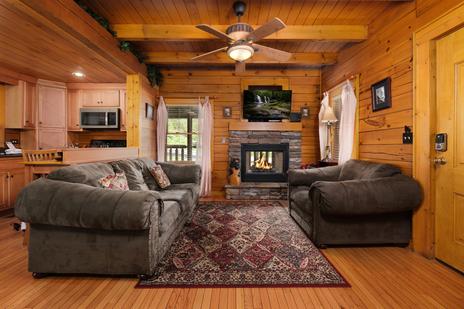
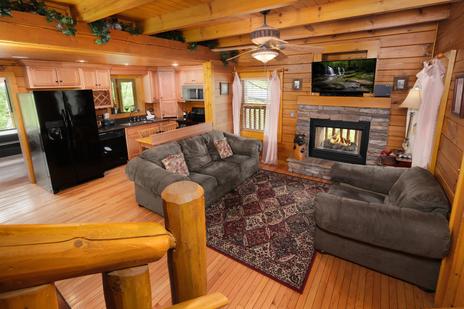
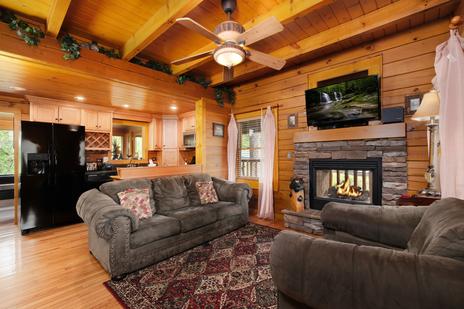
All seven of these are accessible from a Gatlinburg cabin or a Smoky Mountain cabin in the surrounding area.