Abandoned Elkmont Ghost Town
Published Nov 20, 2023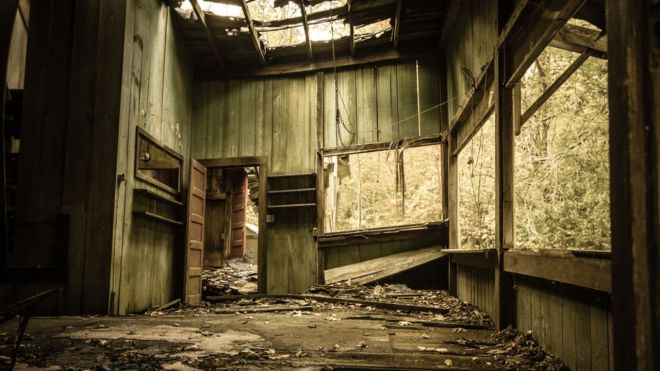
Hidden in the western section of Great Smoky Mountains National Park, the abandoned resort community of Elkmont is one of the more genuinely unusual places in the Smokies — a ghost town of decaying summer cottages built in the 1910s and 1920s, left behind when private leases expired in the 1990s and the park reclaimed the land. Walking through it feels like stepping into a different era entirely.
A brief history of Elkmont
Elkmont's story begins at the turn of the 20th century with the Little River Lumber Company, which established a logging camp in the area around 1901 and built a railroad up the Little River gorge to transport timber. The operation was one of the largest in the Smokies — the railroad pushed deeper into the mountains as the accessible timber was cut, and Elkmont became the main staging point for the industrial logging that stripped much of the park's current old-growth areas in the years before protection.
As logging declined, the railroad infrastructure became the basis for something unexpected: tourism. In 1910, the Knoxville-based Appalachian Club gained access to Elkmont as a summer resort, and wealthy Knoxville families began building vacation cottages in the area. The Club constructed a large clubhouse and managed the community as a private summer colony. A second community — Daisy Town — developed nearby with its own cottages and a more informal atmosphere. Through the 1910s and 1920s, Elkmont was one of the most fashionable summer addresses in East Tennessee, with families returning season after season for dances, picnics, and the cool mountain air.
The establishment of Great Smoky Mountains National Park in the 1930s ended the resort era — but not immediately. The government purchased the land and allowed existing leaseholders to retain their properties for lifetime leases, which passed to heirs. Families continued using their Elkmont cottages for decades after the park's creation, an unusual arrangement that reflected the political complexity of the park's formation. By the 1980s, pressure mounted to restore the area to its natural state. Leases were not renewed as they expired, and by the mid-1990s, the last private occupants had departed. The National Park Service debated demolishing the structures entirely before deciding to preserve the most historically significant ones and let the rest decay in place — a ghostly middle ground between restoration and erasure.
Today, the Appalachian Club Cottages and Daisy Town remain in various states of decay and partial stabilization. The NPS has preserved several of the most intact structures and interprets the site's history on-site. The overall effect — crumbling porches, overgrown walkways, rusted fixtures, and stone chimneys standing where the structures around them have collapsed — is one of the most evocative historical landscapes in any national park in the eastern United States.
Exploring the Elkmont historic district
Elkmont is located in the western section of the park, accessed via Little River Road from Gatlinburg — a 30-minute drive from the Sugarlands Visitor Center. The Elkmont Campground serves as the main staging area; the historic district is a short walk from the campground entrance.
The Appalachian Club Cottages are the most substantial remnant — a cluster of two-story wood-frame cottages built between 1910 and 1930 in varying states of stabilization and decay. The club's main building, built in 1911, still stands with its porch and structural frame intact. Several cottages have been partially restored to stabilize them; others have collapsed to their foundations. The NPS has installed interpretive markers throughout the site explaining the history of specific structures and the families who occupied them.
Daisy Town, a short walk further up the valley, is more completely decayed — many of its cottages have collapsed to rubble and foundation stones, with only the stone chimneys remaining upright. The contrast between the two areas illustrates the range of the NPS's preservation approach: active stabilization in the Appalachian Club area, controlled decay in Daisy Town.
The Little River Trail runs through the Elkmont area and provides access to several historic structures as well as the natural scenery of the Little River gorge. The trailhead at the campground also connects to trails leading to Cucumber Gap, Huskey Gap, and ultimately Alum Cave — making Elkmont a practical staging point for longer hikes as well as a historical destination in itself.
The synchronous firefly event at Elkmont — one of the most famous natural spectacles in the eastern United States — occurs annually in late May, when Photinus carolinus fireflies flash in synchronized patterns across the forest floor. The event draws visitors specifically from across the country; access to the peak viewing area at Elkmont requires a National Park Service lottery that opens weeks before the event. Check nps.gov/grsm in early spring for current-year lottery dates.
Tips for visiting Elkmont
When to go. Elkmont is open year-round and at its most accessible during the shoulder seasons — spring wildflowers (April–May) make the surrounding forest vivid, and fall foliage (mid-October) turns the walk through the historic district into something close to theatrical. Summer is warm and the campground is busy but the historic district itself rarely feels crowded. Winter strips the leaves and opens the longest sightlines through the structures, which rewards a different kind of attention.
How long to plan. The historic district walk takes 45 minutes to 90 minutes depending on how thoroughly you read the interpretive markers and explore the individual structures. Adding a hike on the Little River Trail or a walk to the firefly viewing meadow extends the visit to a comfortable half-day. Elkmont makes a strong pairing with a Cades Cove loop on the same day — both are in the western section of the park and share a drive-through-the-mountains character that rewards slow exploration.
What to bring. The structures are uneven and the grounds are unpaved — wear hiking shoes rather than sandals. The Elkmont Campground has restroom facilities near the trailhead. No food or picnic facilities are in the historic district itself, but the campground area has designated picnic spots. Dogs are permitted in the campground area but not on most trails in the national park.
Photography. Elkmont is one of the most photogenic historical sites in the Smokies — the decaying wood textures, the stone chimneys, and the encroaching forest provide genuinely compelling subjects at any time of year. Morning light through the tree canopy hits the cottages from the east in the early hours; overcast days even out the contrast for detail shots of the weathered surfaces. The site rewards slow exploration with a camera more than a quick walk-through.
Frequently asked questions
Is Elkmont Ghost Town open to the public?
Yes — the Elkmont historic district is open to visitors year-round at no charge (Great Smoky Mountains National Park charges no admission). The historic structures are preserved in place and some are accessible for close examination; others are stabilized but fenced or closed to entry for safety. The NPS interpretive markers throughout the site explain the history of each structure.
How do you get to Elkmont from Gatlinburg?
Take Little River Road west from the Sugarlands Visitor Center for approximately 4.9 miles, then turn left on Elkmont Road and follow it 1.5 miles to the campground. The drive from Gatlinburg takes about 30 minutes. The historic district is a short walk from the campground parking area. GPS navigation works for this route — search "Elkmont Campground, Great Smoky Mountains National Park."
What is the synchronous firefly event at Elkmont?
Each year in late May, the Photinus carolinus firefly species at Elkmont synchronizes its flashing pattern — thousands of fireflies lighting simultaneously, going dark together, then flashing again in waves. The timing falls in the last two weeks of May, shifting slightly each year based on temperature and conditions. Access to the peak viewing area at Elkmont requires entering a National Park Service lottery, which opens weeks before the event. Check nps.gov/grsm in early spring for the current year's lottery dates and process.
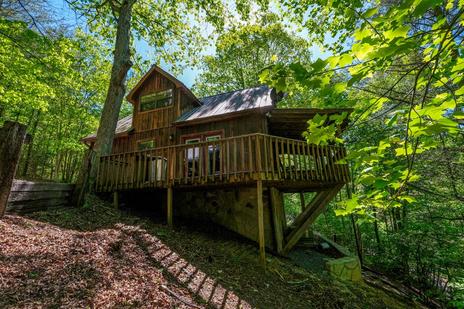
A Gatlinburg cabin puts Elkmont 30 minutes from your door — close enough for a morning visit combined with a hike or a Cades Cove loop.