Will I See a Bear at My Cabin in Gatlinburg?
Published Mar 3, 2020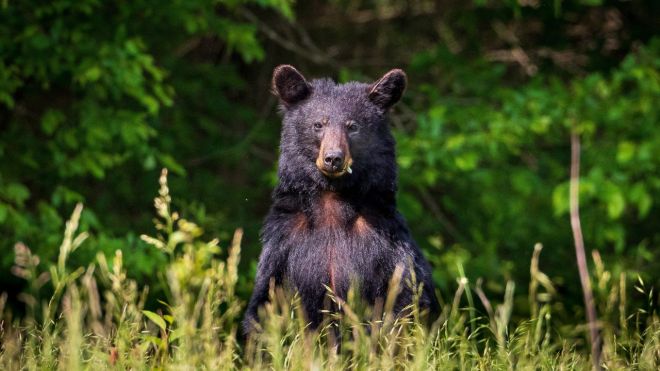
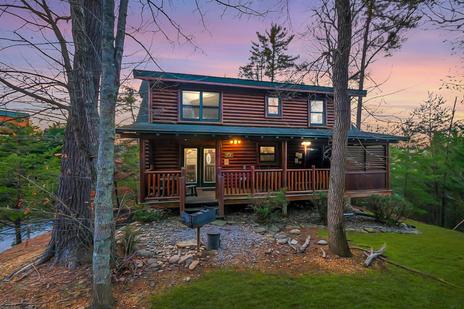
It's one of the most common questions guests ask before a Smoky Mountain trip: will I actually see a bear at my cabin? The honest answer is maybe — Gatlinburg sits at the edge of one of the largest protected black bear habitats in the eastern U.S., so sightings near cabins do happen. Here's what to expect and exactly how to stay safe (and keep the bears safe too).
Bears of the Great Smoky Mountains
Great Smoky Mountains National Park is home to an estimated 1,500 black bears — roughly two per square mile — and the surrounding gateway communities like Gatlinburg fall right within their range. Bears have adapted to living alongside the towns at the park's edge, which means seeing one near your cabin, crossing a road, or ambling through a wooded neighborhood is a real possibility, especially if your cabin backs up to the forest.
Bears are most active in spring and fall — April, May, and October in particular — when they're foraging heavily. A bear's strongest sense is smell: they can detect food from more than a mile away, seven times better than a bloodhound. That's the single most important thing to understand, because it explains every safety rule that follows. If there's an accessible food smell at your cabin, a bear may investigate. Remove the smell and the reason to approach disappears.
Don't feed the bears — it's the law
Feeding a bear — intentionally or not — is the most dangerous thing a visitor can do, and it's illegal. In Great Smoky Mountains National Park, feeding or willfully approaching within 50 yards of a bear is a federal offense punishable by fines up to $5,000 or up to six months in jail. Feeding is also illegal within Gatlinburg city limits. The reason is blunt: a bear that learns to associate people with food becomes a "problem bear," and problem bears frequently have to be euthanized. As the saying among rangers goes, a fed bear is a dead bear.
This includes unintentional feeding — leaving trash accessible, food in a car, or a dirty grill out. Bears can open unlatched trash lids with a flip of a paw, and they've learned to open unlocked car doors and windows.
Staying bear-safe at your cabin
Most bear encounters at cabins are entirely preventable with a few habits. Colonial Properties cabins, like all Gatlinburg rentals, are equipped with bear-resistant trash containers — use them, and make sure the lid is closed and latched every time. Beyond that:
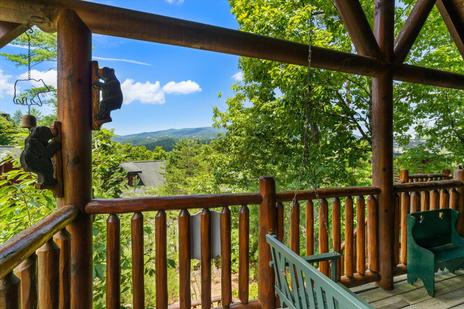
Keep all food and trash indoors or in the bear-resistant container, never piled beside it. Don't leave food, coolers, or even scented items in your car; keep vehicle doors and windows closed and locked, even when you're just running back inside for a moment. Clean the grill after each use and store it closed. Never leave pet food outside. And don't toss food scraps off the deck or into the woods behind the cabin — it teaches bears the cabin is a food source and endangers the next guests as much as the bear.
What to do if you see a bear
Seeing a black bear can be a highlight of your trip — from a safe distance. Black bears are seldom aggressive and attacks are rare, but they deserve respect. If you spot a bear before it notices you, stand still, enjoy the moment, and then move away quietly in the opposite direction. If the bear is aware of you, do not run — running can trigger a chase response. Back away slowly, and make sure the bear always has an escape route and is never cornered, especially a mother with cubs.
Keep dogs leashed at all times — dogs are involved in the majority of physical encounters between people and black bears. If you're hiking, consider carrying bear spray, which can reach about 32 feet and deter an approaching bear. Report any aggressive bear, unusual behavior, or anyone feeding a bear to park authorities at (865) 436-1230, and dial 911 for an emergency. Trails are sometimes closed for aggressive bear activity, so check the park's closure page before you hike.
Frequently asked questions
How likely am I to see a bear at my Gatlinburg cabin?
It varies. Cabins backing up to the national park or set deep in the wooded ridges have a higher chance of a sighting than cabins in more developed areas, and sightings are more common in spring and fall when bears forage actively. There's no guarantee either way — but if you do see one, it's usually passing through, and keeping food and trash secured makes a lingering visit far less likely.
What should I do if a bear comes onto my cabin deck or porch?
Go inside, bring any pets and children in with you, and don't try to shoo it away up close. From safely indoors, you can make noise to encourage it to move along, and remove whatever attracted it (grill, trash, food) once it's gone. Never approach it for a photo. If the bear is aggressive or won't leave, call park authorities at (865) 436-1230.
Is it safe to hike near Gatlinburg with bears around?
Yes — millions of people hike the Smokies safely every year. Hike in groups, keep children close, carry bear spray if you like, store food securely, and never approach a bear you encounter. Check the park's temporary closures page before you go, especially in spring and fall, since trails occasionally close for bear activity.
Planning a stay? Browse Gatlinburg cabin rentals — all equipped with bear-resistant trash containers — and read up on the wildlife you'll see in Cades Cove before you go.