Top Benefits of Staying in a Cabin Versus a Hotel
Published Jul 15, 2024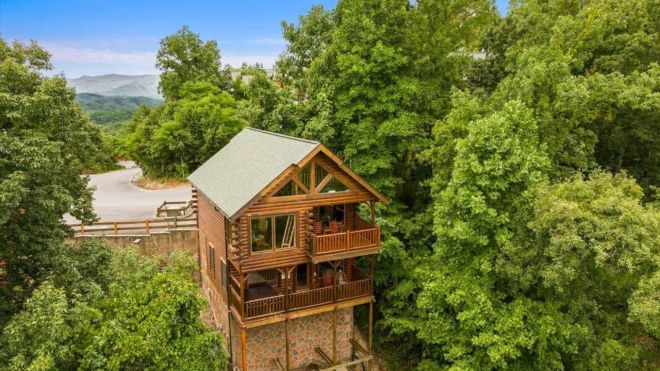
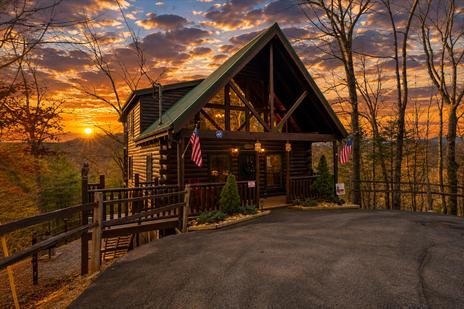
Hotels make sense for a one-night business stop or an airport layover. For a Smoky Mountain vacation — where the accommodation is part of the experience — a private cabin delivers things a hotel structurally cannot. Here's the honest comparison across eight dimensions that matter most to vacationers.
1. Value for Groups
A hotel room accommodates two to four people at a fixed nightly rate. A cabin's nightly rate covers the entire property — four, six, ten, or more guests sharing the same cost. For a family of six or a group of eight friends, the per-person nightly cost of a well-equipped cabin is typically lower than equivalent hotel rooms, while the experience is considerably better. The math compounds across a multi-night stay: the savings on accommodation alone often covers a full day of attraction tickets. Browse affordable cabin rentals to see the full range of options at the lower end of the price spectrum.
2. A Real Kitchen
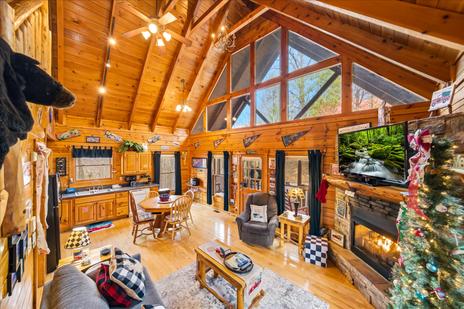
Every Colonial Properties cabin comes with a fully equipped kitchen — cookware, dishes, utensils, full-size refrigerator, oven, and stovetop. This is one of the most financially significant differences from a hotel stay. Dining out for three meals a day across a five-night family trip adds up to a meaningful portion of the vacation budget; cooking breakfasts and lunches in the cabin eliminates most of that cost and redirects it toward the experiences that actually make the trip memorable. It also changes how the mornings feel: a cabin breakfast at the kitchen table, at your own pace, before heading to Dollywood or the national park is a different start to the day than a hotel breakfast rush. Pigeon Forge grocery stores — Kroger, Food City, and Publix — are all close by for a full stock-up on arrival.
3. Space and Privacy
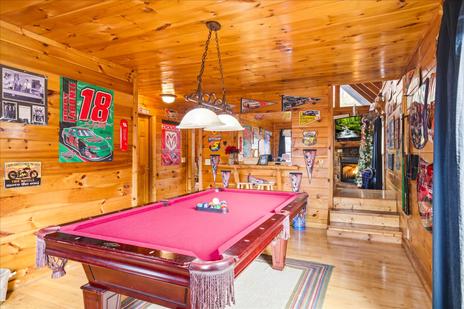
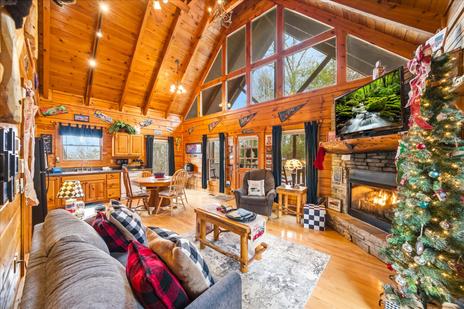
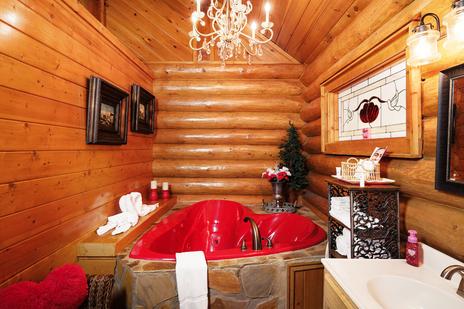
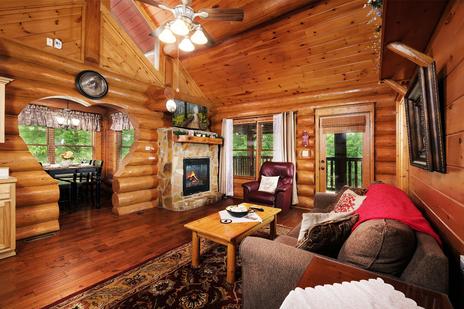
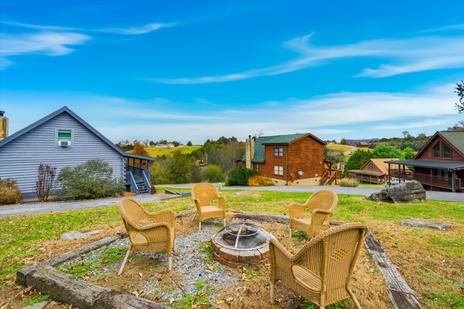
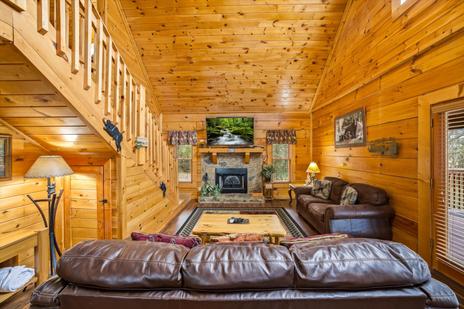
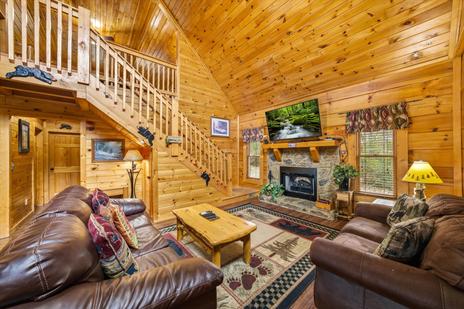
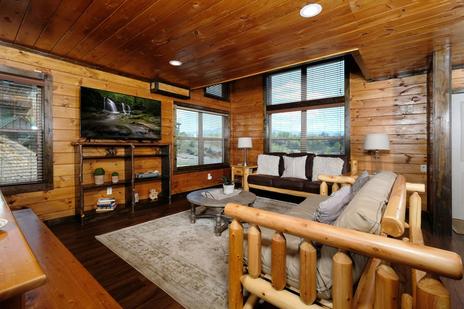
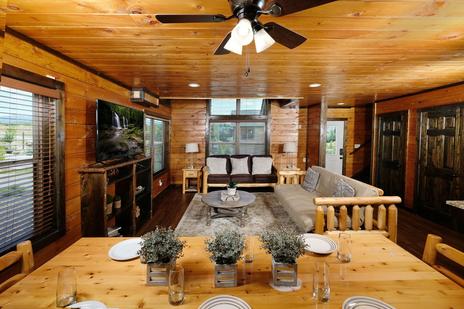
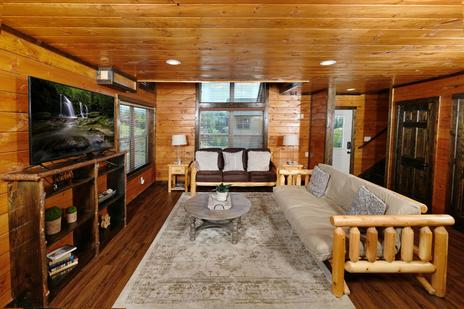
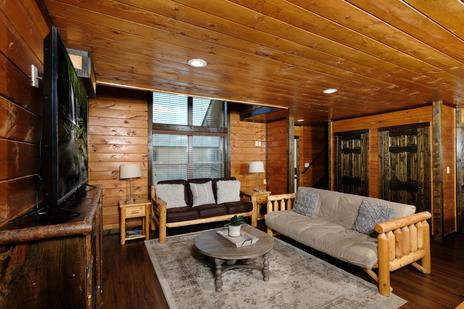
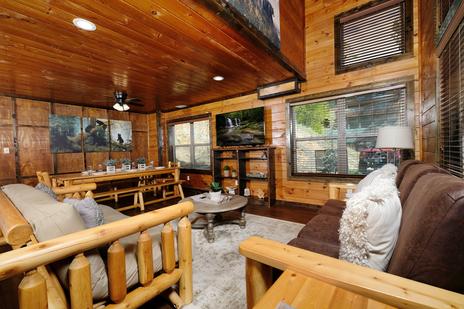
A hotel room, even a suite, is a single space. A cabin is a home: multiple bedrooms, a living room, a dining area, outdoor decks, and often a game room or loft. For families with children, this means the adults have a living room after the kids go to bed. For groups of friends, it means everyone has a private bedroom rather than sharing a room with another adult. No shared hallways, no elevator noise at 2 AM, no strangers at the door. The cabin's outdoor space — a covered deck, a fire pit, a hot tub — extends the usable square footage further, and it's yours exclusively for the duration of your stay. The difference in daily quality of life between a cabin and a hotel room compounds across a multi-night vacation in a way that's difficult to appreciate until you've experienced both.
4. Private Amenities — No Sharing
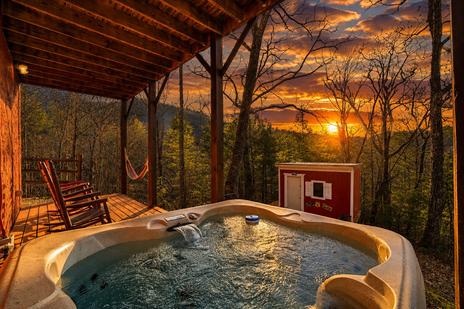
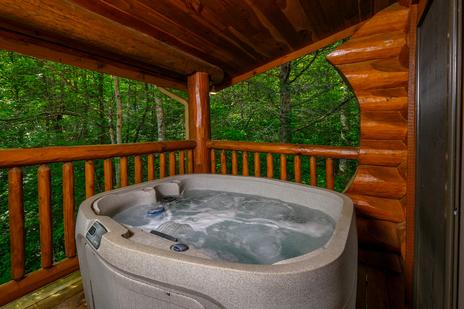
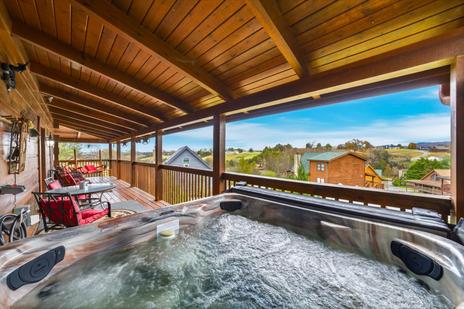
Hotel amenities — the pool, the hot tub, the fitness center — are shared with every other guest in the building. They have hours, they have crowds, and they have closing times. A cabin's amenities are yours alone, available at any hour, with no competition. A private hot tub on a mountain-view deck at 11 PM is a completely different experience from a hotel hot tub surrounded by strangers. A private indoor pool open year-round with no lane schedule and no closing time is not something any hotel offers at a comparable price point. A theater room and a game room that belong entirely to your group for the full duration of your stay — no booking required, no time limits — are the cabin's strongest value arguments against any hotel.
5. Outdoor Living Space
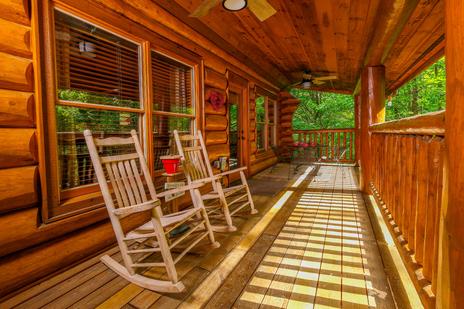
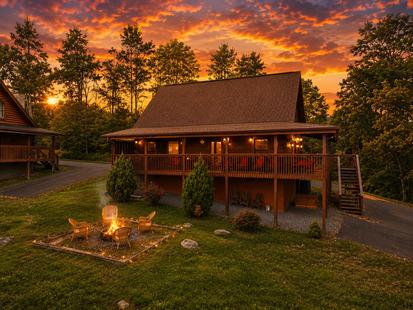
A hotel balcony overlooking a parking lot is a feature on a spec sheet. A cabin deck, porch, or fire pit area surrounded by Smoky Mountain forest is a destination. The covered deck becomes where the group spends its evenings — coffee in the morning with the ridgeline visible, dinner outside when the weather cooperates, s'mores at the fire pit after dark, a long soak in the hot tub before bed. These aren't amenities you use once; they anchor the daily rhythm of the trip. Mountain view cabins turn the outdoor space into something genuinely scenic — a view that would require a premium upgrade at even the best hotels in the area.
6. Location Flexibility
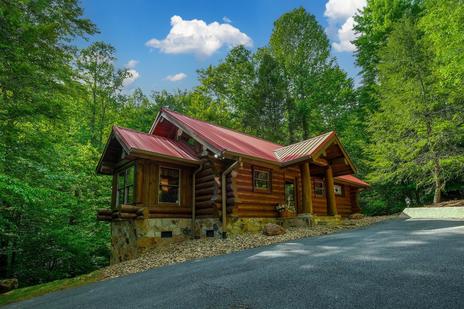
Hotels in Gatlinburg and Pigeon Forge cluster on or near the Parkway — convenient for walkability, but embedded in the traffic and noise that comes with it. Cabin inventory spreads across the full geography of the region: wooded hillside communities above the Parkway, riverside settings along the Little Pigeon River, national park-adjacent locations in Cobbly Nob and Ski Mountain Road, quieter pastoral settings in Wears Valley. This means you can choose a base that matches what you actually want from the trip — seclusion and forest immersion, proximity to Dollywood, national park access — in ways that hotel inventory simply doesn't offer. Every location is still within 15 to 20 minutes of Gatlinburg or Pigeon Forge's main attractions.
7. Pet-Friendly Options
Hotel pet policies tend to be restrictive — weight limits, breed restrictions, limited room types, and per-night fees that erode the cost advantage of bringing a pet rather than boarding. Pet-friendly cabin rentals give dogs space to move, outdoor areas to explore, and no shared lobbies or elevator rides. For families that consider the dog part of the vacation, a cabin is the only accommodation type that actually works. Pet policies and any associated fees vary by property — confirm before booking.
8. The Stay & Play Pass
Every Colonial Properties cabin booking includes the Stay & Play Pass — one complimentary attraction ticket per paid night at more than 20 Smoky Mountain destinations. For a family staying four nights, that's four attraction tickets per person included in the cabin rate. No hotel stay in the Smoky Mountains includes anything comparable. On a multi-night trip with multiple guests, the pass adds substantial value that further tilts the per-person cost comparison in the cabin's favor.
Frequently Asked Questions
Is a cabin actually cheaper than a hotel in Pigeon Forge?
Per person per night, a cabin is usually less expensive than equivalent hotel rooms for groups of four or more — and significantly less for larger groups. A cabin's nightly rate covers the whole property, so the per-person cost drops as group size increases. The kitchen savings compound that further: a group that cooks half its meals in the cabin can offset a meaningful portion of the cabin rate compared to dining out three times a day.
Are Smoky Mountain cabins good for families with young children?
Cabins are significantly better suited to families with young children than hotels. Separate bedrooms mean kids on an earlier sleep schedule don't keep everyone else up. A private yard or deck gives children outdoor space without a shared pool or lobby. Game rooms and theater rooms provide in-cabin entertainment for weather days or post-activity wind-downs. And the kitchen handles the dietary specificity that young children's eating tends to require.
What's the main downside of a cabin vs. a hotel?
Cabins require more advance planning — the best properties book weeks or months ahead, especially for peak weekends and fall foliage season. Some cabins are on steep mountain roads that require a capable vehicle. And unlike hotels, cabins don't have a front desk: check-in is self-guided, and maintenance requests go to the management company rather than a lobby. For travelers who value those hotel conveniences, these trade-offs are worth knowing ahead of time.