Surprising Facts About Gatlinburg, Tennessee
Published Nov 26, 2023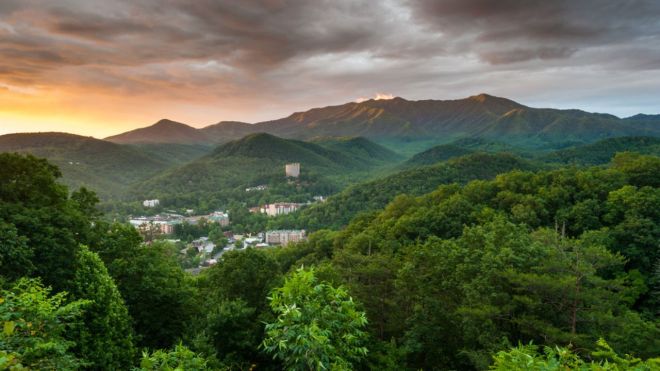
Gatlinburg draws more than twelve million visitors a year as the main gateway to the most visited national park in the United States — and most of them don't know much about the town itself. Here are nine facts about Gatlinburg that tend to surprise even repeat visitors.
Gatlinburg was originally called White Oak Flats
Before it became Gatlinburg, the town was known as White Oak Flats — a name derived from the abundance of white oak trees across the valley floor. The name changed in the mid-19th century after Radford Gatlin, a local businessman who opened the town's second general store. The detail that tends to surprise people: Gatlin wasn't particularly popular with his neighbors. Various accounts describe him as difficult and contentious enough that the townspeople eventually asked him to leave. He did — but his name stayed on the town and has endured for more than 170 years.
It's one of the most visited small towns in the United States
Gatlinburg's permanent population is roughly 4,000 people. The town hosts somewhere between 11 and 15 million visitors per year — an extraordinary ratio by any measure. That volume is almost entirely driven by its position as the primary eastern entrance to Great Smoky Mountains National Park, which is itself the most visited national park in the country, drawing more visitors annually than the Grand Canyon and Yellowstone combined. The infrastructure that has grown up around this volume — the Parkway attractions, the dinner shows, the resort cabin industry, the restaurant and retail concentration — makes Gatlinburg function as a much larger city than its population suggests.
The Space Needle was built in 1969
The Gatlinburg Space Needle at 407 Parkway has been part of the downtown skyline since 1969 — predating the majority of the Parkway's current attraction landscape. At 407 feet tall, it provides a 360-degree observation deck with panoramic views of Gatlinburg, the surrounding ridge systems, and the national park. The rotating elevator ride to the top takes about 30 seconds. The observation level includes an enclosed interior with displays and an outdoor observation deck. For visitors arriving in Gatlinburg for the first time, the Space Needle view orients the whole geography of the town and the park in a way that's hard to get at street level.
Ober Gatlinburg is Tennessee's only ski resort
Ober Gatlinburg, the mountaintop resort accessible via the aerial tram from the downtown Parkway, is the only ski resort in Tennessee. The facility has been operating since 1962 — making it one of the longer-running ski areas in the Southeast — and offers skiing, snowboarding, and snow tubing when natural and manufactured snow conditions allow. The resort's aerial tram, which has been running since 1973, is a 2.1-mile cable car ride from the base station at 1001 Parkway to the summit at approximately 3,300 feet. Ober's Wildlife Habitat, ice skating rink, mountain coaster, and alpine slide operate year-round alongside the seasonal snow activities, making the summit worth visiting in any season.
The SkyBridge is the longest pedestrian suspension bridge in North America
The Gatlinburg SkyBridge, which opened in 2019 at SkyLift Park, is 680 feet long — the longest pedestrian suspension bridge in North America. At its midpoint, the bridge is 140 feet above the forest floor, with a 30-foot glass panel section where you can look straight down through the bridge deck to the treetops below. The bridge is accessible via the SkyLift, the same yellow chairlift that has operated on Crockett Mountain since 1954. The combination of the chairlift ride and the bridge walk has made SkyLift Park one of the most popular attractions in Gatlinburg since the bridge's opening.
The Arts & Crafts Community has been operating since 1937
The Great Smoky Arts & Crafts Community, an eight-mile loop of more than 100 independent artisan studios east of downtown Gatlinburg, was established in 1937 — making it one of the oldest and largest independent arts and crafts communities in the United States. The studios produce pottery, jewelry, glasswork, woodwork, quilts, paintings, and hand-woven textiles, all made on-site by the artisans who sell them. The community predates most of the Parkway's current commercial development and represents an unbroken thread of Appalachian craft tradition that has continued through the region's transformation into a major tourist destination.
Gatlinburg hosts one of the oldest Fourth of July parades in the country
Gatlinburg has staged a Fourth of July parade since 1912 — more than a century of continuous celebration that makes it one of the longest-running Independence Day parades in the United States. The parade runs through the downtown Parkway with floats, bands, local organizations, and the kind of small-town pageantry that's increasingly rare at this scale. July 4th is one of the busiest weeks of the year in Gatlinburg; the combination of the parade, the national park access, and the Winterfest-style fireworks draws visitors specifically for the holiday. Book accommodations well in advance for any Fourth of July visit — the week fills months ahead.
You can experience dramatically different temperatures within a single day
Gatlinburg sits at approximately 1,300 feet elevation at valley level, while the peaks of the national park behind it reach above 6,600 feet. That 5,000-foot elevation difference produces a temperature differential of 15–20°F between the valley and the summit on any given day — which means a comfortable 75°F afternoon in downtown Gatlinburg may be jacket weather at Kuwohi (Clingmans Dome). The result in practical terms: visitors who hike to higher elevations without extra layers can find themselves unprepared for genuinely cold conditions within an hour's drive of a summer afternoon in town. The same dynamic that produces the Smokies' famous layered mist — cool air sinking into the valleys from the cooler peaks — creates the weather variability that can make a single day in Gatlinburg feel like multiple seasons.
Gatlinburg was rebuilt after devastating wildfires in 2016
In November 2016, a severe drought and high winds drove wildfires from the national park into the residential and commercial areas of Gatlinburg and neighboring Chimney Tops 2 fire. Fourteen people died and more than 2,400 structures were damaged or destroyed — the worst wildfire disaster in the eastern United States in modern history. The recovery was substantial and rapid: within two years, most of the affected areas were rebuilt, and by 2019 Gatlinburg was setting visitor records. The resilience of the community and the support of the surrounding region through the recovery are frequently cited as defining moments in Gatlinburg's recent history. The 2016 fires also produced significant changes to regional fire management policy and defensible space requirements across the Smokies corridor.
Frequently asked questions
Why is Gatlinburg so popular?
Gatlinburg's appeal is primarily its position as the main gateway to Great Smoky Mountains National Park — the most visited national park in the United States — combined with a well-developed tourist infrastructure of attractions, restaurants, cabin rentals, and entertainment that makes it a destination in its own right. The combination of natural scenery, outdoor access, and Parkway entertainment gives the town a range that satisfies families, couples, and outdoor enthusiasts simultaneously.
How old is Gatlinburg?
The area was settled by European-American families in the early 19th century, with the Ogle family arriving around 1802 and establishing one of the first homesteads. The town was incorporated under its current name in the mid-1800s. The national park was established in 1934, which transformed Gatlinburg from a small Appalachian community into the tourism gateway it is today.
Browse Gatlinburg cabin rentals and plan your stay in one of the most visited small towns in America.