Must-Have Kitchen Essentials for Your Pigeon Forge Cabin Stay
Published Jul 29, 2024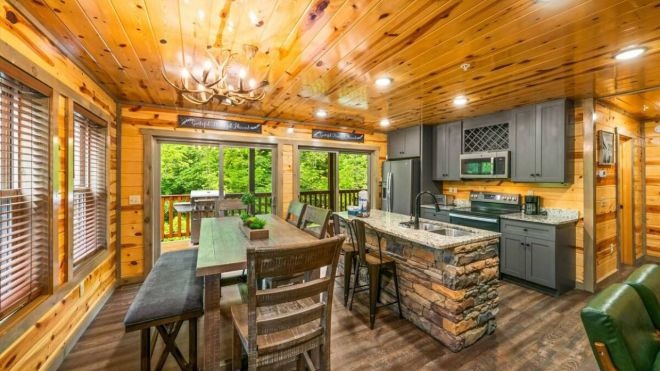
Every Colonial Properties cabin comes fully equipped with cookware, dishes, glasses, and utensils — you don't need to bring kitchen gear to cook in the cabin. What makes the difference is the personal items, specialty equipment, and pantry staples that the cabin can't stock for you. Here's exactly what to bring.
Your Pantry Staples and Favorite Ingredients
The cabin kitchen has the equipment; you supply the pantry. Cooking oils, spices, vinegars, hot sauce, salad dressings, and condiments — the things that make your cooking taste like yours rather than a generic version of it — are worth packing from home. You can buy all of these at Pigeon Forge grocery stores (Kroger, Food City, and Publix are all in town), but buying them there means spending time shopping on day one and paying retail prices for things you already have at home. The more practical approach: fill a small bag with the oils, spices, and condiments you actually use, pack it alongside the cooler, and arrive ready to cook the first evening without a grocery run. If you plan to bake, bring baking staples too — flour, sugar, baking powder — since cabins don't stock baking supplies. Local additions worth picking up on arrival: sourwood honey from a local market, Tennessee hot sauce, and freshly ground cornmeal from the Old Mill store in Pigeon Forge make cabin cooking feel distinctly regional.
Your Preferred Knives and Any Specialty Gadgets
Cabin kitchens are stocked with functional knives and standard prep tools — everything needed for normal cooking. If you're a confident cook with strong preferences, bringing your own knives is worth doing: a trusted, sharp chef's knife is a tool that's difficult to replicate from an unknown set, and cooking with a blade you know makes the whole process faster and more enjoyable. Beyond knives, bring any specialty gadgets that are specific to how you cook: a mandoline for precise slicing, a microplane for zesting, a digital thermometer for meat, a coffee grinder if fresh-ground coffee is non-negotiable. These are the tools the cabin can't anticipate needing. Everything else — can opener, peeler, whisk, ladle, mixing bowls — is already there.
Specialty Cookware or Bakeware
For any dish that requires specific equipment — a wok, a cast iron skillet, a Dutch oven, a Bundt pan, a muffin tin, a lasagna dish — bring the specific piece from home. The cabin's standard cookware handles most meals well, but specialty cooking requires specialty tools that no rental property can stock comprehensively. If your trip plan includes a big family lasagna, a specific baked good, or any dish that requires a particular pan size or material, the few extra minutes of packing are worth it. Lighter specialty items (silicone baking mats, a pastry brush, a bench scraper) are easy to tuck in; bulkier items like cast iron should go in the car's trunk rather than competing for bag space.
Food Storage and Wrap
Leftovers, packed lunches for trail days, and half-used ingredients all need reliable storage. Cabin kitchens don't stock plastic wrap, aluminum foil, zip-lock bags, or food storage containers — bring these from home. A set of lightweight, stackable food storage containers is the most versatile option: they handle leftovers, serve as prep bowls, and double as lunch containers for national park picnics. A box of zip-lock bags in two sizes covers everything else — marinating proteins, packing trail snacks, storing cut produce. Aluminum foil earns its place for campfire cooking at the fire pit and for covering dishes going in and out of the oven. These are all available at Pigeon Forge grocery stores if you forget, but they're cheap and light enough to pack routinely.
Picnic and Day-Trip Supplies
The national park is 15 to 20 minutes from Pigeon Forge and has some of the best picnic spots in the eastern United States — creekside tables in Metcalf Bottoms, the Cades Cove picnic area, and river-adjacent pulloffs throughout the park. For day trips, a soft-sided insulated cooler bag is the right format: light enough to carry from the car to a picnic table, holds enough for a group lunch, and packs flat in a suitcase. Reusable ice packs (freeze them the night before) are significantly more practical than buying bagged ice on arrival — they don't melt into water in the bag, can be refrozen each night, and eliminate daily ice purchases. For longer days or larger groups, a hard-sided cooler belongs in the car's trunk from the first day. Bring a simple set of picnic utensils, napkins, and a cutting board — the full national park experience is considerably better with food from the cabin rather than a drive-through stop on the way.
Your Coffee Setup
Most Colonial Properties cabins include a standard drip coffee maker or a Keurig-style pod machine. If your morning coffee ritual depends on a French press, pour-over dripper, AeroPress, or espresso machine, bring the device from home — the cabin won't have it. Pack your usual beans or grounds alongside it; the cabin's coffee maker will use whatever you bring. That said, Pigeon Forge has good local coffee options worth trying: local roasters and coffee shops along the Parkway offer beans to take home and cups to start the day when you don't feel like brewing. Tea drinkers should bring their preferred bags and an electric kettle if the cabin doesn't list one in the amenities — a quick check of the listing before packing saves the morning-of frustration of finding only a drip machine.
Where to Grocery Shop in Pigeon Forge
Pigeon Forge has full-service grocery options within minutes of the Parkway: Kroger, Food City, and Publix all have complete selections for a cabin stay. Stopping on the way into town — before navigating to the cabin — is the most efficient approach; you'll need the groceries immediately and the Parkway can be congested during peak season. For a week-long stay, a full grocery run on arrival and a mid-week top-up is the standard pattern. For a long weekend, one well-planned grocery run covers everything. The cabin's fully equipped kitchen means you have everything you need to cook — the only variable is what you put in it. A simple meal plan before you leave home saves the "what are we eating tonight" conversation that wastes the first evening of a trip.
Frequently Asked Questions
What kitchen equipment is already in a Colonial Properties cabin?
All Colonial Properties cabins come fully equipped with cookware (pots, pans, baking sheets), dishes, glasses and mugs, eating and cooking utensils, and basic prep tools. You don't need to bring pots, pans, plates, or standard kitchen tools — those are all there. What's not stocked: pantry items (spices, oils, condiments), specialty cookware, food storage supplies, picnic equipment, and specialty coffee brewing devices.
Is it worth cooking in the cabin instead of eating out every meal?
Yes — both financially and experientially. A cabin breakfast every morning saves significantly over restaurant breakfasts across a multi-day trip. A packed picnic for a national park day eliminates a mid-hike drive back to town. A cabin dinner one or two nights gives the group private time together that a restaurant can't replicate. Dining out at Pigeon Forge's best restaurants for special meals and cooking in for casual ones is the optimal balance most guests land on.
Are there grocery stores near Pigeon Forge cabins?
Yes — Kroger, Food City, and Publix are all in Pigeon Forge with full grocery selections. Gatlinburg has a Food City. The best approach is stopping at the grocery store on the way into town before heading to the cabin, so you arrive stocked and ready to cook the first evening.