5 Fascinating Secrets About Cades Cove
Published Mar 29, 2023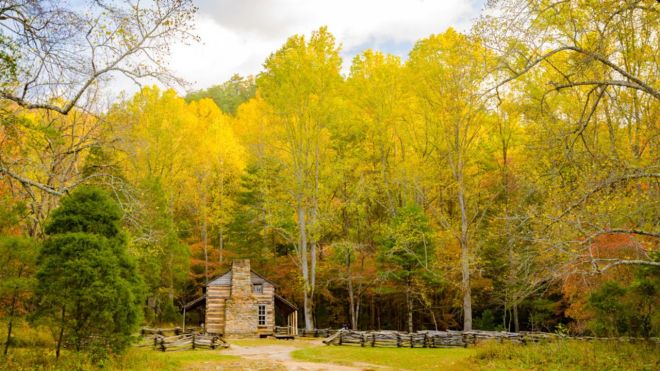
Most visitors drive Cades Cove's 11-mile loop and see the obvious stops — the Cable Mill, the churches, the deer in the open meadow. These five are the ones you have to know to look for: stories embedded in the landscape that the loop road signs don't explain.
The Pearl Harbor Tree
Near Cades Cove's Baptist church, look for a sweetgum tree with a metal tire rim fused into its trunk — grown around it over decades until the rim is now embedded in the wood itself. The tree has a story that connects this remote Appalachian valley to one of the most significant days in American history.
On December 7, 1941, Cades Cove farmer Golman Myers was listening to the radio when President Roosevelt announced the Japanese attack on Pearl Harbor. Myers went outside, pulled up a sweetgum sapling from the woods, replanted it in his front yard, and placed a tire rim around its base — a marker, he said, so his family would remember that day forever. The farmhouse is long gone. The tree is still there, the rim absorbed into its trunk, still keeping his promise.
The Henry Whitehead Place
The Henry Whitehead Place tells one of the more quietly moving stories in the cove. When Matilda Shields's husband abandoned her and their young son, neighbors came together to build her a rough-hewn log cabin — basic shelter, the kind a community could put up quickly for someone who needed it.
Years later, Henry Whitehead started courting Matilda. He vowed to build her a proper home — and he did: a beautifully crafted cabin erected directly in front of her old one. But rather than tear down the original cabin that had sheltered her through hard years, Henry extended his new roof out over it, connecting the two structures under one sheltering line. You can still see them standing together today: the original rough cabin and Henry's finer one, linked by the roofed porch he built as a gesture of respect for everything she had endured before he arrived.
Gourley's Pond
Gourley's Pond is one of the quietest stops in Cades Cove — a small pond tucked off the loop road that most visitors drive past without knowing it's there. To reach it, park at the LeQuire Cemetery and walk back down the road approximately 200 feet until you see a path leading off to the right. The path takes you to the pond, where in spring and summer the edges are alive with dragonflies and frogs, and the surrounding woods provide reliable cover for deer, wild turkeys, and smaller wildlife. It's the kind of stop that rewards the visitors willing to get out of the car and walk a short distance away from the loop.
The Cantilever Barn
Near Tipton Place, you'll see what looks like a barn perched on stilts — its upper loft extending dramatically out beyond the ground-level base below. This is a cantilever barn, a construction technique unique to the Appalachian region that became the area's signature barn design in the 19th century. The deep overhang of the upper loft serves two practical purposes: it shields the barn's stored hay and contents from rain without requiring additional framing or exterior walls, and it provides a shaded, protected area at ground level for animals and farm equipment. It's an engineering solution developed from local materials and local conditions, and the Tipton Place example is one of the best-preserved in the park.
Gregory's Cave
Near the John Oliver Cabin, look for a striking 10-foot-high stone entrance set into the hillside — the mouth of Gregory's Cave. J.J. Gregory opened the cave as a tourist attraction in 1925, marketing it to the early visitors who began coming to the Smoky Mountains after the development of automobile roads. The cave later served an entirely different purpose: during the Cold War, it was designated as a fallout shelter. The cave is closed to public entry today, but the entrance is worth a photograph — a substantial natural portal in the hillside that most visitors walk past without noticing it's there, let alone knowing its double history as both a Depression-era tourist stop and a Cold War civil defense site.
Frequently asked questions
How do I find these stops on the Cades Cove loop?
The Pearl Harbor Tree and Henry Whitehead Place are marked on the Cades Cove map available at the loop entrance and at the Cades Cove Visitor Center. Gourley's Pond requires parking at LeQuire Cemetery — look for the cemetery sign on the loop road and walk 200 feet back toward the entrance to find the pond path. The Cantilever Barn is near Tipton Place, which is a signed stop on the loop. Gregory's Cave is near the John Oliver Cabin, the first major structure you encounter after entering the one-way loop.
When is the best time to visit Cades Cove for wildlife and fewer crowds?
Early morning — arriving at or before the loop road opens — gives you the best combination of wildlife activity and manageable traffic. Deer, black bears, wild turkeys, and coyotes are most visible in the early morning hours when the meadow is quieter. Wednesday mornings the loop road is closed to vehicles and open only to cyclists and pedestrians, which is the most peaceful time to experience the cove on foot. October fall foliage combined with the open meadow views makes Cades Cove one of the most spectacular fall destinations in the park — but also one of the busiest. Arrive before 8 AM on October weekends.
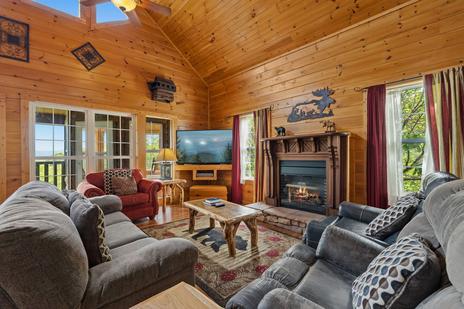
A Wears Valley cabin rental puts the Cades Cove entrance 15 minutes from your door — the right base for a morning on the loop before the crowds arrive.