The Best Time to Spot Bears in Gatlinburg: A Month-by-Month Guide
Published Jan 3, 2025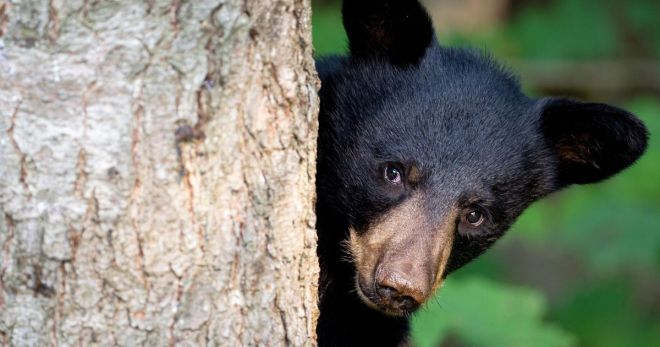
Great Smoky Mountains National Park is home to approximately 1,900 black bears — a population density of roughly two bears per square mile, one of the highest concentrations of black bears in the eastern United States. The park provides the largest protected bear habitat in the East, and Gatlinburg sits directly at its entrance. A bear sighting isn't guaranteed on any given day, but knowing when and where to look changes the odds significantly.
Before You Go: Safety and Regulations
Willfully approaching a black bear within 50 yards (150 feet), or any distance that disturbs or displaces a bear, is a federal violation in the national park — punishable by fines and arrest. This applies on trails, in Cades Cove, along Roaring Fork, and anywhere within park boundaries. The regulation exists because a bear that becomes habituated to human proximity is a bear at risk: food-conditioned bears are frequently relocated or euthanized for public safety. Intentionally feeding a bear carries fines up to $5,000.
The right way to watch bears: binoculars, a telephoto lens, or a spotting scope from the road or a safe distance. Bears are wild animals whose behavior can be unpredictable. If a bear approaches you, make yourself look large, raise your arms, speak firmly, and back away slowly — never run, and never turn your back. Full safety guidelines are at nps.gov/grsm/learn/nature/black-bears.htm.
When to Look: Time of Day
Regardless of season, bears are most active during the two hours after sunrise and the two hours before sunset — roughly 6–9 AM and 4–7 PM during summer months. The midday hours are the least productive for bear watching; the heat of a summer afternoon drives bears to shade and rest. Early morning is consistently the best window: the roads are quieter, the light is good for photography, and bears that have been active through the night are still moving. On cooler fall days, bears may remain active through the middle of the day as hyperphagia (the intense pre-winter feeding period) drives them to maximize foraging hours.
January–February: Rare Sightings
Smoky Mountain black bears don't truly hibernate — they enter a state of torpor, sleeping deeply but capable of waking and moving during warmer winter stretches. January and February are the deepest den months: pregnant females give birth in their dens in January, and newborn cubs (born hairless, eyes closed, roughly the size of a can of soda) spend the first weeks of their lives nursing while their mother sleeps. Adult males may emerge briefly during a warm spell, but winter bear sightings are genuinely rare and shouldn't be expected.
The winter months still offer wildlife value — white-tailed deer are highly visible in the leaf-off forest, and wild turkeys are active year-round. Cades Cove in winter, with the meadows clear and the bare forest edges visible, is excellent for deer and turkey even when bears are denned.
March–May: Cubs Emerge
March signals the beginning of serious bear activity — adult males typically emerge from torpor first, followed by solitary females, and finally by mothers with their new cubs. The winter cubs are approximately three months old when they first leave the den, weighing three to five pounds and capable of climbing trees but not yet strong enough to travel far. This is the most visually spectacular bear-watching window of the year for families: a mother foraging in a spring meadow while two or three cubs romp nearby, periodically scrambling up trees when startled, is the quintessential Smoky Mountain wildlife scene.
Spring bear sightings tend to cluster near lower-elevation meadows and creek corridors where early vegetation is coming in — Cades Cove is reliably productive from March onward, and the Roaring Fork Motor Nature Trail (which opens in spring after its winter closure) provides excellent roadside viewing through forested creek habitat. Scan the trees as well as the ground: cubs perch in the branches of oaks and beeches while their mothers forage below, and they're easier to spot in the bare early-spring canopy than later in the season when the leaves fill in.
June–August: Peak Season
June through August is peak bear sighting season — the highest probability of an encounter, even for visitors who aren't actively watching for bears. Summer brings multiple behavioral drivers into alignment: bears are foraging intensively to build body weight (adult males average 250 pounds in summer, females around 100 pounds), mating season runs through July, and the park's 12+ million annual summer visitors mean bears are encountered at trailheads, along roadsides, and occasionally in developed areas.
The best summer spotting locations are Cades Cove (where bears graze the meadow edges in the early morning, visible from the paved loop road without leaving your car), the Roaring Fork Motor Nature Trail (forested creek habitat with consistent bear activity), and Newfound Gap Road (which runs through prime bear country for its entire length). The Chalet Village neighborhood above Gatlinburg — where development meets forest edge — also produces frequent bear sightings, particularly at dawn. Go early: by 10 AM on a summer weekend, Cades Cove is crowded and bears have retreated to cover.
September–October: Hyperphagia
September through early November is actually the most productive overall bear-watching window of the year, though it's less commonly known than the summer peak. The reason is hyperphagia — the period when bears dramatically increase their food intake to build the fat reserves that carry them through winter torpor. A bear in hyperphagia may eat 20,000 calories a day, foraging almost continuously. Activity levels are higher, and bears that would rest in midday shade during a hot August afternoon are still moving through a cooler October midday.
The mast crop — acorns, chestnuts, and other hard nuts — is the primary fall food source. Bears concentrate wherever the mast is dropping, which means the mature oak and beech forests on the park's slopes are the best fall spotting habitat. Cades Cove remains productive; the Appalachian Trail corridor at higher elevations sees significant bear traffic in the fall as animals move to find food. The leaf color peaks in October, adding a visual backdrop to bear watching that makes the experience genuinely spectacular — fall is the best combined season for the overall Smokies experience.
November–December: Winding Down
November brings a gradual transition from hyperphagia to torpor — bears are still active and feeding through much of the month, particularly on warmer days, but the activity tapers as temperatures drop. December sightings become rare as most bears have entered their dens. The timing varies by individual animal, elevation, and annual weather conditions: a warm November extends the active season; an early cold snap accelerates denning. Bears at lower elevations and in milder microclimates may remain active longer than their higher-elevation counterparts.
Best Spots for Bear Watching
Cades Cove. The most reliable bear-watching location in the park — an open valley with meadow edges, creek margins, and mature forest, accessible by paved 11-mile loop road. The loop is one-way and vehicle-only (no bikes on motor vehicle days); arrive at or before opening time on busy weekends to secure good viewing positions before the road fills. Bears are frequently visible from the road without any hiking required.
Roaring Fork Motor Nature Trail. A one-way 5.5-mile loop through old-growth creek habitat — bears are regularly sighted along the creek margins and forest edges. Open spring through fall (closes December–March). More intimate viewing than Cades Cove — slower traffic and narrower road mean more time to stop and observe.
Newfound Gap Road (US 441). The 20-mile route from Gatlinburg to the state line passes through excellent bear habitat at multiple elevations. Roadside sightings are common, particularly at dawn and dusk. Pull completely off the road and keep your distance from any roadside bear — "bear jams" with dozens of cars are common and can be dangerous if drivers stop abruptly.
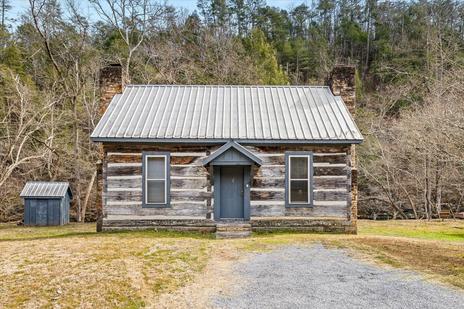
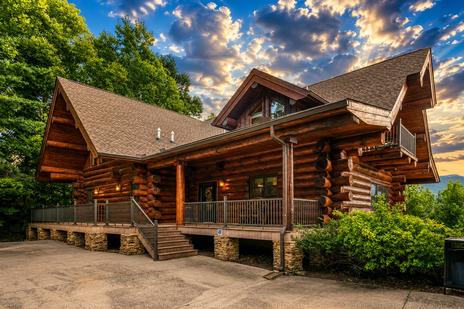
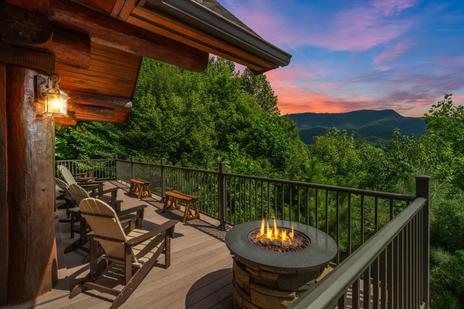
Gatlinburg cabin area. Bears move through wooded cabin neighborhoods, particularly at forest edges and near creeks. Early morning on a mountain view cabin deck occasionally produces a sighting — stay quiet, stay inside or at distance, and don't feed or approach.
Frequently Asked Questions
How many bears live in the Smoky Mountains?
Approximately 1,900 black bears live in Great Smoky Mountains National Park — a population density of roughly two bears per square mile. The population is variable and has grown significantly since the early 1990s as habitat protections and food storage regulations have taken effect.
What is the best month to see bears in Gatlinburg?
June through August for the highest overall probability of a sighting; late September through October for the most active bears (hyperphagia drives intense feeding behavior that makes bears easier to find). Spring (March–May) for the most visually spectacular experience — mother bears with young cubs in spring meadows.
How close can I get to a bear?
No closer than 50 yards (150 feet) under any circumstances — this is federal law in the national park, enforced with fines and arrest. Any distance that disturbs or displaces the bear is also illegal, regardless of the 50-yard rule. Use binoculars or a telephoto lens.
Can I see bears from a Gatlinburg cabin?
Yes — bears move through wooded cabin neighborhoods regularly, particularly at forest edges and near creeks. Sightings from a cabin deck or yard are not uncommon, especially early morning. Maintain your distance, never feed or approach the bear, and secure any food, trash, or scented items outside.