Driveway and Access Road Maintenance in Winter
Published Sep 16, 2026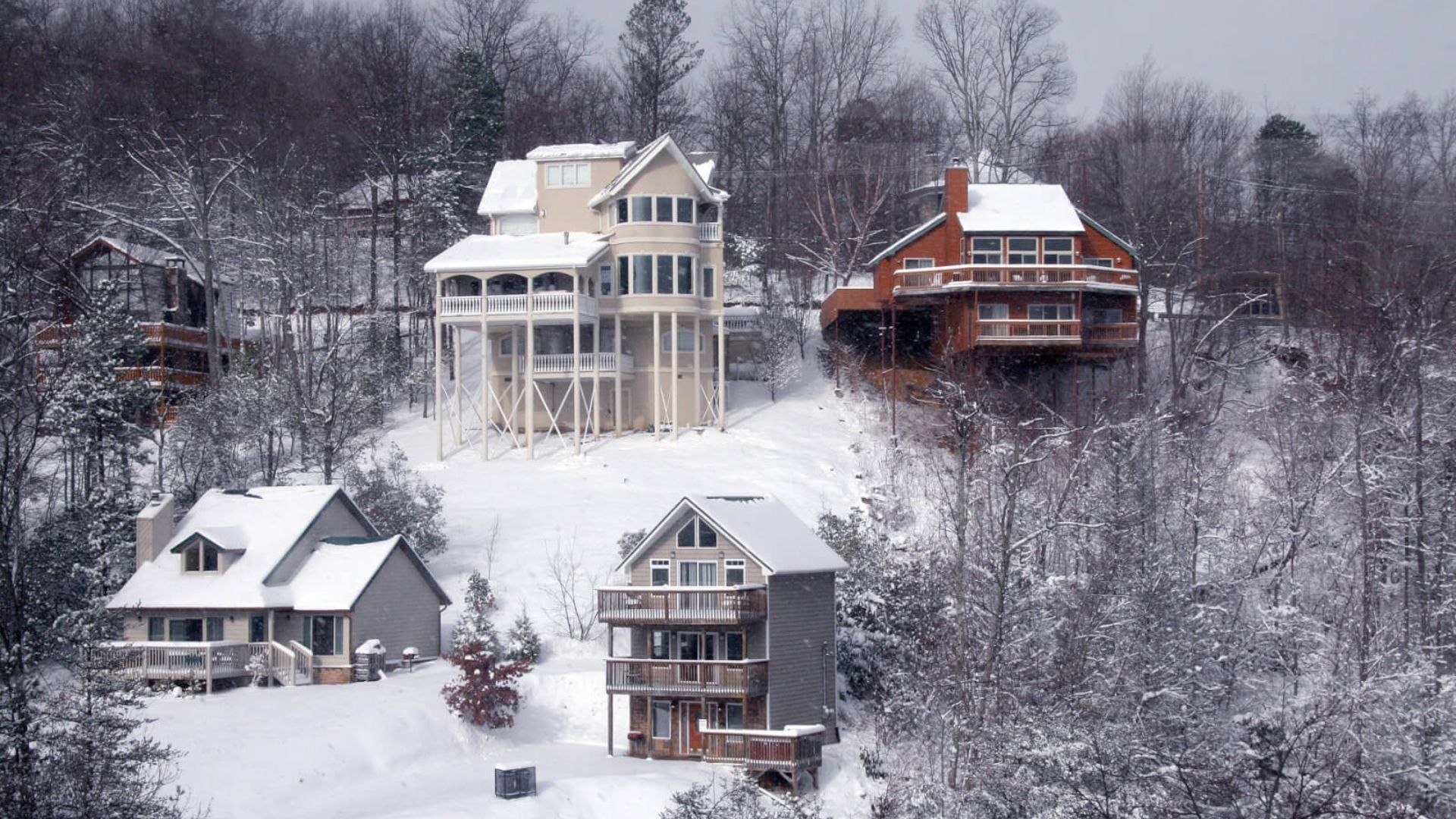
A Smoky Mountain cabin's greatest asset — its perch on a wooded hillside with a long-range view — is also its biggest winter liability. Steep, winding driveways and shared access roads that are charming in July become genuinely hazardous when ice and snow arrive. For a cabin owner, winter access isn't a minor detail: it's the difference between a guest checking in smoothly and a guest who cancels, gets stuck, gets hurt, or leaves a one-star review. Here's how to think about driveway and access-road maintenance through the cold months, and why it's one of the clearest arguments for local, hands-on professional management.
Why winter access is a bigger deal in the Smokies than owners expect
Most Smoky Mountain cabins sit at elevation, up grades that can be surprisingly steep, on driveways that switchback through the trees. Add the region's real winter weather — the higher elevations get meaningful snow and ice, and shaded mountain roads stay frozen long after the valleys have thawed — and you have a recipe for access problems that flatland rentals never face.
The stakes are concrete. A guest who can't safely reach the cabin may cancel on arrival (a lost booking and often a refund), attempt the climb anyway and slide off or get stuck (a dangerous, expensive situation), or make it up but leave a scathing review about the "terrifying" drive. Worse, a slip-and-fall on an icy driveway or walkway is a genuine liability exposure. Winter access management protects your revenue, your guests, and you.
Know your driveway before winter arrives
The first step is an honest assessment of what you're working with, done before the first freeze — not during it:
- Grade and layout. How steep is the driveway, and where are the tightest turns and worst pitches? The steepest, most-shaded section is where ice forms first and lingers longest — that's your problem spot.
- Surface. Paved, gravel, and concrete each behave differently in ice and snow and call for different treatment. Know what you have.
- Drainage. Water that pools and refreezes is the enemy. Poor drainage that's a nuisance in summer becomes a sheet of ice in winter. Identify where water collects and runs across the driveway.
- Shared vs. private access. Many cabins reach the main road via a shared access road or private community road. Who's responsible for maintaining and treating it? This is a critical question with real cost and liability implications — know the answer before winter, not after a guest is stuck on it.
- Sun exposure. North-facing and heavily wooded stretches never see sun and stay frozen for days. Map these.
Do this in the fall. Walk (or drive) your access from the main road to the cabin door before winter, noting every problem spot. You can't fix what you haven't identified, and scrambling to assess an icy driveway in the middle of a cold snap — with a guest arriving — is the wrong time.
Proactive winter maintenance
Fix drainage before it freezes
The single most effective long-term move is solving drainage problems so water doesn't pool and refreeze across the driveway. Clearing culverts, adding or repairing drainage channels, and correcting low spots in the fall pays off all winter. It's the least glamorous item here and often the most impactful.
Keep de-icing materials stocked and on-site
Have ice melt and sand or grit staged at the cabin before the season, not bought in a panic mid-storm when stores sell out. Sand and grit add traction on gravel and steep grades; ice melt handles paved and concrete surfaces. Keep enough on hand for a multi-storm stretch.
Choose de-icers carefully. Rock salt can damage concrete, corrode metal, harm nearby plants and trees, and run off into the sensitive mountain watershed. Consider gentler, pet- and plant-safer, concrete-safe alternatives, and use sand or grit for traction where melting isn't practical. This matters more in an environmentally sensitive area like the Smokies than in a suburban driveway.
Line up snow and ice removal in advance
For cabins with serious grades or in higher-elevation areas that get real snow, have a plan for professional plowing, salting, or sanding before the storm — a contractor lined up, or a management company whose team handles it. Trying to find a plow driver during a regional snow event is a losing proposition; they're all booked. The owners who handle winter well are the ones who arranged it in October.
Don't forget walkways, steps, and the parking area
The driveway gets you there, but the icy steps up to the door, the walkway, and the parking pad are where slip-and-falls actually happen. These need de-icing and traction too — and they're the highest-liability spots because that's where guests are on foot. Hot-tub decks and stairs deserve particular attention.
Set guest expectations honestly
Even with great maintenance, a steep mountain driveway in winter is a steep mountain driveway. Managing guest expectations before arrival prevents most winter access problems:
- Be upfront in your listing. If the driveway is steep or four-wheel/all-wheel drive is genuinely recommended in winter, say so clearly. A guest who arrives in a rear-wheel-drive sedan expecting flat access is a problem you created by not disclosing it. Honesty here prevents cancellations, bad reviews, and dangerous situations.
- Send winter arrival guidance. A pre-arrival message with directions for the final approach, a heads-up about the grade, and a recommendation to check conditions and carry chains or drive appropriate vehicles in snow sets guests up to succeed.
- Give a real-time contact. Guests hitting an icy approach need someone to call. A responsive local contact who can advise, dispatch treatment, or help problem-solve turns a potential disaster into a managed situation.
Accurate, specific winter access information in your listing also ties into broader accessibility disclosure — being honest about what it takes to reach and enter the cabin. (For more on describing your property accurately, see our post on accessibility and compliance for cabin owners.)
Protect the cabin itself, too
Winter access management goes hand in hand with protecting the property during cold months. While you're thinking about the driveway, don't overlook:
- Freeze protection. Frozen and burst pipes are a catastrophic winter risk in an unoccupied or thermostat-lowered cabin. Keep heat at a safe minimum during vacancies, know where the water shutoff is, and consider leak- and freeze-sensors that alert you or your manager early — the kind of monitoring covered in our post on smart-home devices for rental cabins.
- Fireplaces and heat sources. Guests rely on them in winter, so they need to be serviced and working. (Note that seasonal wood-burning fireplaces are typically only operational in the colder months — make sure guests know what's available.)
- Gutters and roof. Clear gutters prevent ice dams; a pre-winter roof check heads off leaks under snow load.
Why this is a local-management job
Here's the honest reality: winter access management is nearly impossible to do well from a distance. It requires someone who can watch local conditions, respond during a storm rather than days later, dispatch plowing or treatment on short notice, check on the property, and talk a guest through an icy approach in real time. An owner living out of state, or a management company operating remotely, simply can't do that — and a booking platform certainly can't.
This is one of the clearest, most concrete arguments for local, in-house professional cabin management. A locally based team with its own maintenance staff handles the fall drainage assessment, keeps de-icing materials staged, has snow-removal arrangements in place, treats walkways and steps, protects the cabin from freeze damage, sets accurate winter expectations with guests, and is reachable in real time when a guest hits ice at 9 p.m. It's the kind of behind-the-scenes work that quietly prevents cancellations, protects guests, limits your liability, and keeps winter — one of the most beautiful and profitable seasons in the Smokies — earning rather than costing you. If you want to know what that level of hands-on management could mean for your cabin's winter bookings, see what your cabin could earn.
Frequently asked questions
Do Smoky Mountain cabins really need winter driveway maintenance?
Yes — more than most rentals. Many cabins sit on steep, winding, often-shaded mountain driveways at elevation, where ice and snow linger long after the valleys thaw. Without proactive maintenance, winter access problems cause cancellations, stuck or damaged vehicles, guest injuries, and bad reviews. It's one of the most important seasonal tasks for a mountain cabin.
What's the best way to de-ice a cabin driveway?
Keep ice melt and sand or grit staged on-site before the season. Use sand or grit for traction on gravel and steep grades, and a concrete-safe, plant- and pet-friendlier ice melt on paved surfaces — rock salt can damage concrete, corrode metal, and harm the sensitive mountain watershed. For serious grades and snow, arrange professional plowing/sanding in advance, and don't neglect walkways, steps, and the parking area, where slip-and-falls happen.
Who is responsible for maintaining a shared access road?
It depends on the arrangement — some shared or private community roads have homeowner or association responsibility, others are handled individually. This is a critical question to answer before winter, since it affects both cost and liability. A local management company will know the local norms and can help sort out responsibility for your specific access.
Should I mention my steep driveway in the listing?
Absolutely. If the driveway is steep or all-wheel/four-wheel drive is genuinely recommended in winter, disclose it clearly. A guest who arrives unprepared is a cancellation, a bad review, or a dangerous situation you could have prevented. Honest disclosure sets the right guests up to succeed and protects you.
Can a management company handle winter access for me?
A local, in-house management team is the ideal solution — winter access management requires real-time, on-the-ground response that's nearly impossible from a distance. A good manager handles the fall assessment, stages de-icing materials, arranges snow removal in advance, treats walkways and steps, protects the cabin from freeze damage, sets guest expectations, and is reachable when a guest hits ice. It's one of the clearest reasons local management pays off.
Winter is one of the most beautiful and profitable seasons in the Smokies — but only if guests can safely reach your cabin. Local, in-house management handles winter access so your cabin keeps earning through the cold months instead of costing you cancellations and headaches.