How to Stay Compliant With ADA Guidelines as a Cabin Owner
Published Sep 11, 2026
Accessibility is one of the most misunderstood topics in the vacation rental business. Some owners assume the Americans with Disabilities Act (ADA) doesn't touch them because a cabin is "just a house"; others assume they must retrofit for full wheelchair accessibility or face a lawsuit. The reality sits between those two — and it depends heavily on the specifics of your property and how it's operated. Here's a plain-English framework for thinking about it, and the practical steps that protect you regardless of the fine legal points.
This article is general educational information, not legal advice. Whether and how the ADA, the Fair Housing Act, and state and local accessibility laws apply to your specific cabin is a fact-specific legal question. Consult a qualified attorney about your particular property before relying on any of the general information below.
Why this is genuinely complicated
Here's the honest starting point that most online articles skip: there is no simple yes-or-no answer to "does the ADA apply to my cabin?" The application of the ADA to short-term rentals is fact-specific and evaluated case by case, and even attorneys describe it as an unsettled area. What follows will help you understand the framework and ask the right questions — but only a lawyer reviewing your specific situation can tell you where your property actually stands.
The ADA framework, in plain English
Title III of the ADA prohibits discrimination in "places of public accommodation," and one of the twelve categories of public accommodation is "places of lodging." The question for a cabin owner is whether your rental functions as a place of lodging in the legal sense.
Factors that tend to push a rental toward ADA coverage
Legal analyses and the ADA regulations point to hotel-like characteristics, including:
- Short-term, transient stays (generally under 30 days) where the guest has no right to return to a specific unit after the stay
- Professional management and a reservation system — on-site or off-site — that operates like a hotel's
- Rooms booked through reservations without a traditional lease or long-term commitment
- Hotel-style amenities and services
Many professionally managed vacation cabins share several of these traits, which is precisely why the question can't be waved away.
The key exemption
The ADA regulations contain a specific carve-out: an establishment with five or fewer rooms for rent that is actually occupied by the proprietor as their residence is not a place of public accommodation. This is the classic owner-occupied bed-and-breakfast exemption. The important implication for most cabin investors: a cabin that is not occupied by the owner as their residence generally does not qualify for this exemption — so you can't assume you're exempt simply because your cabin is a private house.
The ADA isn't the only law in play
Even where the ADA doesn't apply, other legal obligations often do. This is where owners who focus only on the ADA can get blindsided:
- The Fair Housing Act (FHA). The FHA has its own disability-related rules, including reasonable-accommodation obligations, and it treats assistance animals differently from the ADA's service-animal rules. It can apply to housing situations the ADA doesn't.
- State and local accessibility laws. Many states and municipalities have their own accessibility and anti-discrimination requirements that can be broader than federal law. Tennessee and your specific county or city may impose obligations independent of the ADA.
- Building codes. New construction and substantial renovations are subject to accessibility provisions in the building code regardless of the ADA analysis — relevant if you're building or significantly remodeling a cabin.
- Booking-platform and listing rules. The major listing platforms have their own anti-discrimination policies and accessibility-information requirements that apply to your listing regardless of the underlying law.
Service and assistance animals: the issue owners face most
Even if you have a strict no-pets policy, disability-related animal requests are the compliance issue cabin owners encounter most often — and getting it wrong is a common source of complaints.
The ADA and the Fair Housing Act treat these animals differently, and the rules about what you may ask, what documentation you can request, and what you must permit are specific and easy to get wrong. A blanket "no animals, no exceptions" response to a guest's disability-related request can create legal exposure under one framework or another. Because the rules genuinely differ between the two laws and by situation, this is one to handle with your management company's established policy and, where there's any doubt, legal guidance — not an off-the-cuff decision at the point of booking.
Good-practice steps that protect you regardless
Whatever the fine legal analysis concludes for your property, these practices reduce risk and — not incidentally — expand your market to the tens of millions of travelers with disabilities and their families:
Describe accessibility accurately in your listing
One of the simplest and most important things you can do is describe your cabin's actual accessibility features honestly and specifically — steps and stairs, doorway widths, bathroom layout, parking and path-of-travel, and any barriers. Guests with mobility needs rely on accurate information to choose a suitable property. Overstating accessibility (or leaving it vague) leads to bad experiences, complaints, and negative reviews; accurate description helps the right guests book with confidence.
Have a clear, lawful assistance-animal policy
Work out — in advance, with professional guidance — how you handle disability-related animal requests, so a booking-time request is met with a consistent, compliant response rather than an improvised one.
Consider accessibility improvements where feasible
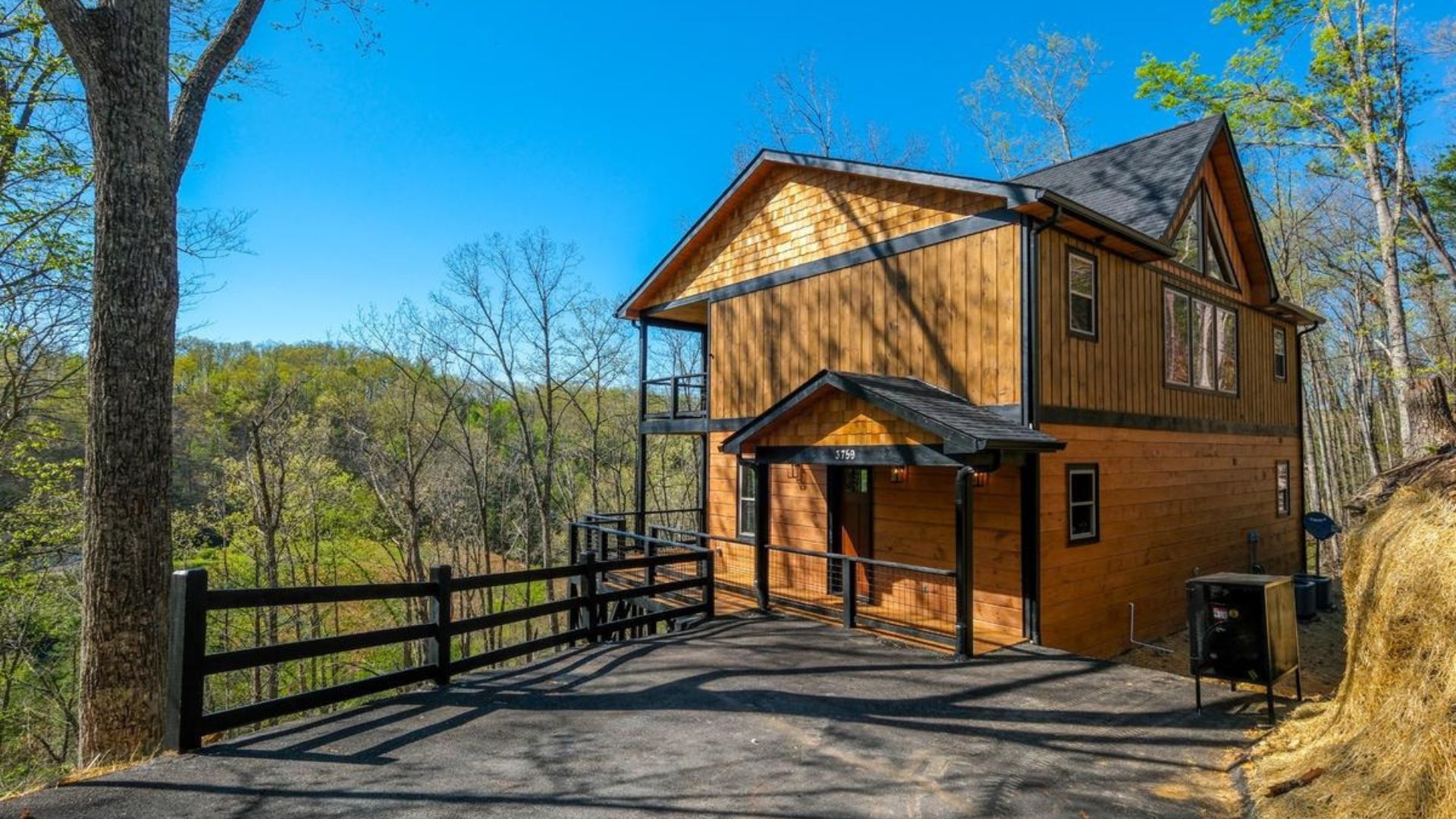
Even modest features — a no-step entry, a ground-floor bedroom and bathroom, grab bars, a roll-in shower, wider doorways, accessible parking near the entrance — make a cabin usable for more guests and can be a genuine competitive advantage, since truly accessible cabins are relatively scarce in a mountain market full of multi-level, hillside properties. If you're building or renovating, it's far cheaper to design for accessibility than to retrofit later.
Document your policies and keep them consistent
Consistent, written policies applied uniformly to all guests are both good operations and a meaningful defense against discrimination claims. Inconsistency is where owners get into trouble.
Get a professional review
Have your specific property and operation reviewed by a qualified attorney, and lean on a professional management company whose policies are already built around fair-housing and accessibility compliance.
The market case for accessibility
Set the legal question aside for a moment, because there's a straightforward business reason to take accessibility seriously: a large and underserved market. Tens of millions of Americans have a disability, and they travel — often with families and companions, and often struggling to find suitable lodging in destinations like the Smokies, where so much of the cabin inventory is multi-level and built into steep terrain. A genuinely accessible cabin, accurately described, stands out in that market and can command strong demand precisely because there's so little competition for it. Compliance and good business point the same direction here.
How a management company helps
A professional management company that already operates within fair-housing and accessibility frameworks takes much of this burden off individual owners: consistent, compliant policies for guest requests and assistance animals; accurate accessibility descriptions in listings; awareness of platform requirements; and established procedures applied uniformly across every booking. That doesn't replace your own legal counsel on your specific property — but it means the day-to-day operational compliance is handled by professionals who deal with these questions across an entire portfolio, not improvised one booking at a time.
Frequently asked questions
Does the ADA apply to my vacation rental cabin?
It depends — the application of the ADA to short-term rentals is fact-specific and evaluated case by case, with no simple yes-or-no answer. Rentals that operate with hotel-like characteristics (transient stays, professional management and reservations, no lease) are more likely to be considered "places of lodging" under Title III. A cabin that isn't owner-occupied generally doesn't qualify for the small owner-occupied exemption. Consult an attorney about your specific property.
Is there an exemption for small or private rentals?
The ADA regulations exempt establishments with five or fewer rooms for rent that are occupied by the proprietor as their residence — the classic owner-occupied bed-and-breakfast. Most investment cabins are not owner-occupied and therefore generally don't qualify for this specific exemption. Whether the ADA otherwise applies is a separate, fact-specific question for legal counsel.
Do I have to allow service or assistance animals even with a no-pets policy?
Disability-related animal requests are governed by the ADA and the Fair Housing Act, which treat these animals differently from pets and from each other. The rules on what you may ask and what you must permit are specific, and a blanket refusal can create legal exposure. Handle these requests through an established, legally reviewed policy rather than an on-the-spot decision, and get guidance where there's any doubt.
If the ADA doesn't apply, am I free of accessibility obligations?
Not necessarily. The Fair Housing Act, state and local accessibility and anti-discrimination laws, building codes for new construction and renovation, and booking-platform policies can all impose obligations independent of the ADA. Focusing only on the ADA can leave you exposed under one of these other frameworks.
What's the simplest thing I can do right now?
Describe your cabin's actual accessibility features and barriers accurately and specifically in your listing, and make sure you have a consistent, legally reviewed policy for disability-related requests. Accurate information and consistent policies both reduce risk and serve guests better. Then get a qualified attorney's review of your specific property.
Operational compliance is easier with a management partner whose policies are already built around fair-housing and accessibility best practices. Colonial Properties manages Smoky Mountain cabins with consistent, professional procedures — and can help you present your property accurately to every guest. (For legal questions specific to your cabin, always consult your attorney.)