Spring Wildlife Watching: What You Can Spot Near Our Cabins
Published Mar 4, 2025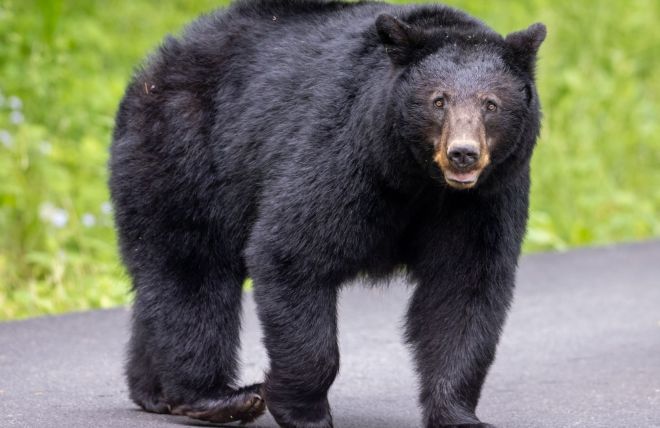
Great Smoky Mountains National Park is home to more wildlife species than any other national park in the eastern United States — and when you're staying in a Smoky Mountain cabin, that wildlife moves through your property, not just through the park trails. Spring is when the sightings are most frequent, most vivid, and most likely to stop you mid-conversation on the deck. Here's what to watch for.
1. Black Bears
The Smokies have one of the highest densities of black bears in the eastern United States — roughly 1,500 bears in the park and surrounding areas, which works out to about two bears per square mile. In spring, bears emerge from their winter dens and become immediately visible as they range through the foothills and mountain corridors looking for food. This is also when mothers appear with cubs born during the winter denning period — small, alert, and almost impossibly appealing at a distance.
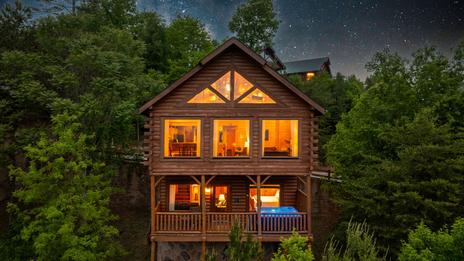
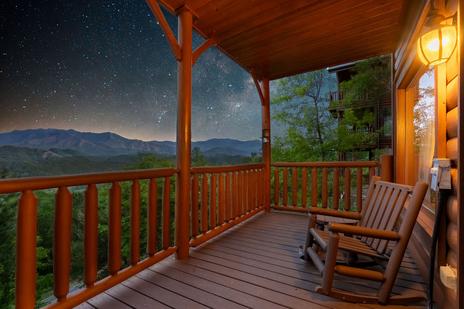
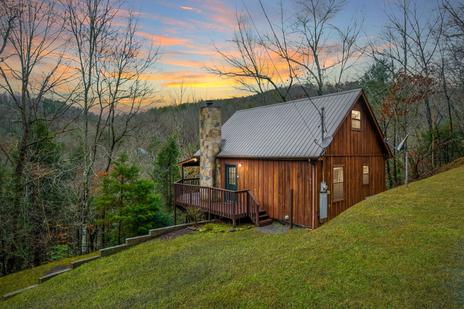
A cabin in a wooded hillside setting — particularly a mountain view or secluded cabin — is the most likely place to spot a bear ambling through the yard or moving along the tree line below the deck. The sighting window is widest in the early morning and at dusk. Observe from inside the cabin or from the deck, maintain distance, and never approach, feed, or entice bears in any way. Keep all food, trash, and scented items secured according to the guidelines in your rental agreement — this protects both you and the bears. Bears that associate humans with food lose their natural wariness and become a problem that ultimately ends badly for the bear.
2. White-Tailed Deer
White-tailed deer are arguably the most reliably seen wildlife near Smoky Mountain cabins — they browse along wood lines, cross cabin yards in the early morning, and appear at the edge of meadows and open spaces at dusk with a calm that suggests they've assessed you as non-threatening and decided you're fine to ignore. In late spring, does begin appearing with spotted fawns — small, still, tucked under shrubs while the mother feeds nearby. The fawn's instinct when it senses danger is to freeze rather than run, which makes them easy to overlook when they're curled in deep grass.
As with bears, observe from a comfortable distance and never approach or feed deer. A fed deer becomes habituated to humans and loses the behavioral patterns that keep it safe in a landscape that includes predators, vehicles, and hunting seasons.
3. Wild Turkeys
Wild turkeys are a consistent and often surprising presence near Smoky Mountain cabins — a flock of five or six birds moving through a yard in the early morning has a particular quality that reminds you how large they actually are when you're not seeing them in a grocery store. Spring is turkey breeding season, which means males are displaying: fans spread, feathers puffed, the slow strut of a bird who has decided he is the most important thing in the landscape. The gobbling starts before sunrise and carries across the hillside in a way that functions as a built-in alarm clock for early risers.
4. Birds — A Remarkable Spring Migration
More than 240 bird species move through or nest in the Smokies — and spring migration brings the full range of warblers, tanagers, thrushes, and raptors through the mountain corridors. The birds to watch for near cabins:
Scarlet tanager: The adult male in spring breeding plumage is one of the most vivid birds in North American forests — jet black wings against a body that's genuinely the color of a stop sign. They arrive in late April and are most visible in the forest canopy at the edge of open areas.
Pileated woodpecker: You'll hear this one before you see it — a loud, resonant hammering that carries a long way through quiet mountain air. Pileated woodpeckers are crow-sized, with a bright red crest, and they excavate large rectangular holes in dead trees looking for carpenter ants. Finding one at work on a snag is a genuine natural history moment.
Tufted titmouse: Small, gray, with a white breast and a subtle orange wash on the flanks — titmice are regular visitors to cabin yards throughout the season and among the more curious birds, occasionally inspecting the porch from close range. They sometimes carry seeds to a perch and hammer them open, and occasionally hang upside down on branch tips in a way that looks more gymnastic than necessary.
Eastern bluebird: Males are a specific, saturated blue that doesn't exist in other North American birds — visible from a distance and unmistakable at close range. Bluebirds favor open areas: cabin yards, meadow edges, and the vicinity of golf courses in resort communities. They're cavity nesters, which means a bluebird box on the property increases your chances of repeat sightings significantly.
Owls: Great horned owls and barred owls are both active and vocal in spring, when nesting and territorial calling peak. The barred owl's call — "who cooks for you, who cooks for you-all" — is the most recognizable owl sound in the eastern United States and carries clearly through cabin windows on quiet nights.
5. Salamanders
The Southern Appalachians are the global center of salamander diversity — more salamander species live in this region than anywhere else on earth, which is why the area is sometimes called the Salamander Capital of the World. The Smokies alone host more than 30 species, ranging from the common red-backed salamander (small, terrestrial, found under almost any log or rock in moist forest) to the hellbender (enormous, flat, river-dwelling, and genuinely prehistoric in appearance).
Cabins near creeks and rivers give you the best access to salamander habitat. Walk the banks and turn over rocks near the water's edge — replace them carefully after looking. The spring amphibian activity peaks as water temperatures rise and the forest warms, making March through May the optimal window. Children in particular find the salamander hunt immediately engaging in a way that no attraction on the Parkway can quite replicate.
6. Turtles
Eight turtle species are native to the Smoky Mountains region — box turtles are the most commonly seen near cabins, moving through leaf litter and crossing yards with the unhurried confidence of an animal whose architecture has worked for 200 million years. Along waterways, painted turtles and snapping turtles bask on rocks and logs in the warming spring sun. A cabin on the river gives you a natural turtle-watching position from the deck or bank — the morning hours when turtles are warming up after a cool night are the best window.
7. Coyotes
Coyotes are widespread throughout the Smokies corridor but rarely seen — they're primarily nocturnal and highly wary of humans. The spring experience is more auditory than visual: coyote howling carries far through the mountain air on quiet nights, particularly in the hour after dark when pack communication peaks. A chorus of coyotes on a still spring night, heard from the cabin deck, is one of the more genuinely wild experiences available from a Pigeon Forge or Gatlinburg cabin without driving anywhere. If you do see one at dusk or dawn, observe from a distance and keep pets inside.
8. Synchronous Fireflies — A Late Spring Bonus
In late May through mid-June, Great Smoky Mountains National Park hosts one of the most spectacular natural light shows in North America: the synchronous firefly display. Unlike the random, individual flashing of common fireflies, synchronous fireflies (Photinus carolinus) coordinate their flashes — thousands of insects lighting up together, going dark, and lighting again in a rhythm that creates a pulsing wave of light through the forest understory. The Smokies are one of only a few places in the world where this species lives, making the display genuinely rare.
The national park manages access to the best viewing areas through a controlled entry system during the peak display period — check nps.gov/grsm for the current season's access and lottery information. Cabins in the Gatlinburg area are close to the primary viewing locations. This phenomenon alone draws visitors from across the country and justifies planning a spring cabin trip around the late May window.
The Right Cabin for Wildlife Watching
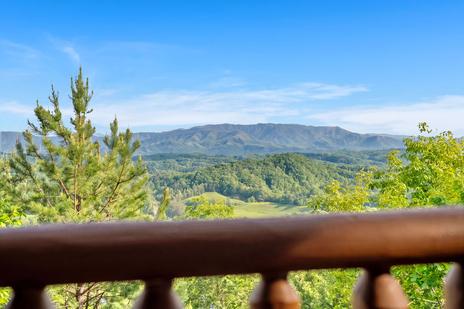
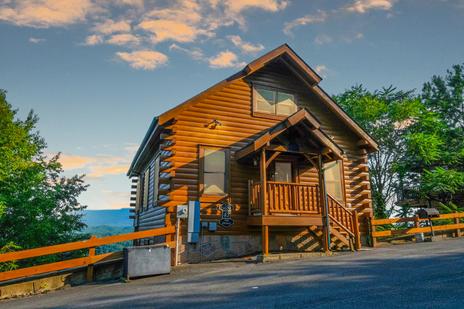
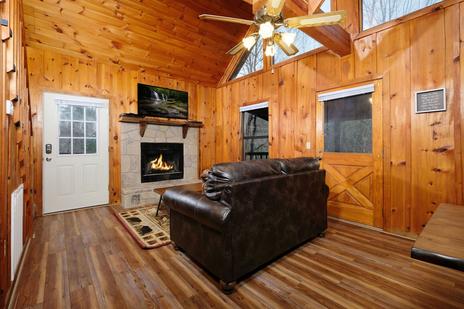
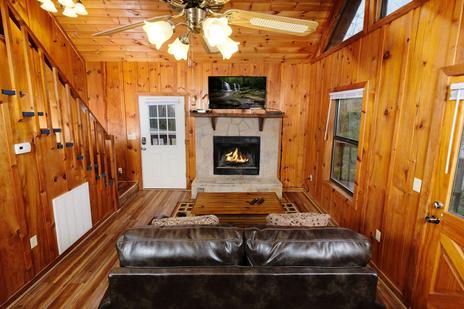
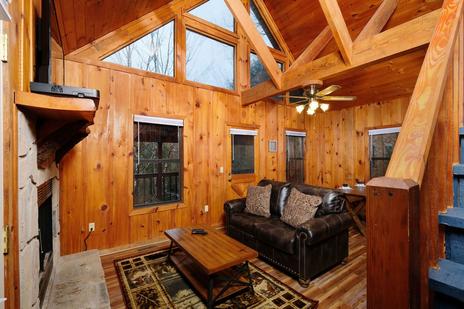
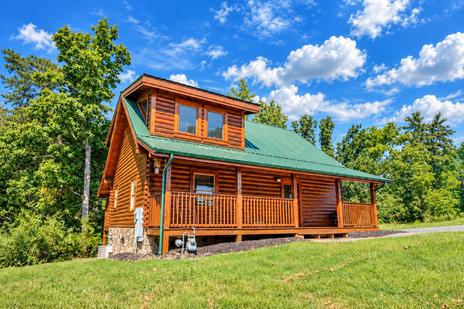
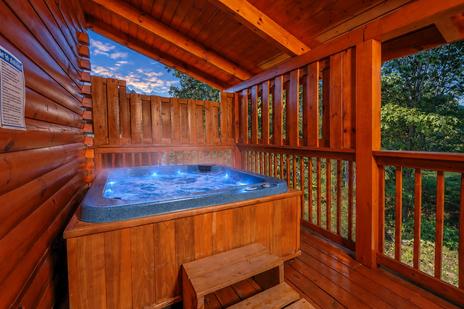
The wildlife you see from a cabin is directly related to the cabin's setting. Wooded, hillside cabins above the valley are the most likely bear and turkey sightings. River cabins give you the best access to salamander, turtle, and otter habitat. Mountain view cabins at elevation are the best positions for dawn bird activity and the widest wildlife corridors. Secluded properties with wooded yards and minimal traffic are the settings where all of these sightings are most frequent.
The best wildlife watching from a cabin deck requires nothing more than patience, binoculars, and an early alarm. Keep food and trash secured, keep noise levels down in the morning, and let the mountain come to you.
Frequently Asked Questions
Is it safe to watch black bears near the cabin?
Yes — observing bears from a cabin deck or through a window is entirely safe. The important rules: never approach, never feed, and secure all food, trash, and scented items as directed in your rental guidelines. Bears are most dangerous when they've lost their natural wariness of humans through food conditioning. A bear that approaches the cabin aggressively has learned to associate humans with food — contact Colonial Properties and report it to the Tennessee Wildlife Resources Agency (TWRA).
What time of day is best for wildlife watching?
Dawn and dusk are the most productive windows — bears, deer, turkeys, and foxes are most active in the low-light hours. Songbirds peak in the first two hours after sunrise. Salamanders and turtles are most visible mid-morning as temperatures rise. Coyotes are primarily nocturnal and best heard rather than seen.
Can I see elk near the cabins?
Elk were reintroduced to the Smokies at Cataloochee Valley in Haywood County, NC — about an hour's drive from Gatlinburg. The Cataloochee herd is reliably visible, particularly at dawn and dusk in the meadows, and a day trip to see them is one of the most impressive wildlife experiences accessible from a Gatlinburg or Pigeon Forge cabin. The drive through the park to reach Cataloochee is itself worth the trip.
Which type of cabin gives the best wildlife viewing?
Wooded, secluded hillside cabins with mountain views are best for bear, deer, turkey, and bird sightings. River cabins are best for salamanders, turtles, herons, and kingfishers. The further a cabin sits from road traffic and neighboring properties, the more wildlife you'll see. Browse mountain view cabins and riverfront cabins for the settings most likely to deliver morning wildlife activity from the deck.