Southern Slang You’ll Likely Hear in the Smoky Mountains
Published Aug 17, 2025
One of the best parts of visiting the Smoky Mountains isn't just the views or the attractions — it's the people. East Tennessee conversation has its own rhythm and vocabulary, a mix of Appalachian tradition and Southern warmth that visitors notice immediately. Here are the phrases you're most likely to hear during your stay.
Y'all
The cornerstone of Southern address — "you all" compressed into one syllable and used for any group of two or more. You'll hear it from the moment you arrive: "How y'all doin'?" at the diner, "Y'all need anything else?" from your server, and the classic send-off as you leave a shop. It's not a caricature — it's genuinely the most efficient word in the language for second-person plural, and once you're back home you'll find yourself missing it.
Fixin' To
"Fixin' to" means about to do something — no tools required. "I'm fixin' to head up to Newfound Gap" or "We're fixin' to get some cinnamon bread at Dollywood." It has a gentle sense of purpose to it, like the thing is already decided and the doing is just a matter of timing. Closely related: "directly," which means soon but with no specific commitment to when.
Bless Your Heart
The most versatile phrase in the Southern vocabulary, and the one that takes the longest to fully understand. It can be genuine sympathy ("Bless your heart, you must be worn out after that hike up Alum Cave"), warm affection, or — delivered in the right tone — a polite vehicle for something considerably less charitable. Context and inflection carry everything. When in doubt, assume kindness and respond accordingly.
Over Yonder
"Yonder" means in that direction, at an unspecified distance — somewhere between here and there. "The trailhead is over yonder past the creek" is a perfectly precise set of directions in the mountains, where landmarks and relationships between things matter more than addresses. It's an old Appalachian English word that has stayed in everyday use in East Tennessee longer than almost anywhere else.
Reckon
"I reckon" means "I think" or "I suppose" — a hedged but sincere opinion. "I reckon it's gonna rain this afternoon" from someone who's lived in the mountains their whole life is worth taking seriously. Mountain weather moves fast and the people who watch it daily have a feel for it that the weather app doesn't. Reckon accordingly.
Full as a Tick
After a plate of biscuits and gravy at Crockett's, a rack of ribs at Bennett's, or a family-style spread at one of the dinner shows, you may find yourself unable to move. The local description: "full as a tick." Vivid, accurate, and impossible to improve on. Variations include "stuffed to the gills" and the more restrained "I've had a gracious plenty."
Might Could
A double modal — two helping verbs stacked together — that's a signature feature of Appalachian and Southern English. "We might could stop at the overlook on the way back" means something between "maybe we can" and "I think we should." It softens a suggestion into something open and easy to agree with. Grammatically unusual; socially perfect.
Holler
In the mountains, a holler (hollow) is a small valley between ridges — the kind of tucked-away community that defined life in the Smokies for generations. "They lived up in a holler" tells you something specific about the geography and the way of life. You'll hear it used both literally (describing terrain) and figuratively — "holler at me when you're ready" means give me a shout.
Hush Up
"Hush up" means stop talking — but almost always said with affection rather than irritation, especially when someone's telling a story that's getting away from the facts. "Hush up, you're telling tall tales!" is a compliment as much as a correction. The Smoky Mountains has a deep oral storytelling tradition, and a little embellishment has always been part of it.
Used To Could
Another double modal, this one referring to a past ability. "I used to could walk that trail in under an hour" means "I was once able to do that." It's precise in a way that standard English isn't — capturing both the capability and the fact that time has passed. Purely Appalachian English, and you'll hear it from older residents especially.
Much Obliged
A formal thank-you that's warmer than "thanks" and carries a sense of genuine debt. "Much obliged" means I owe you one — I'm in your debt and I recognize it. It's old-fashioned in the best way, and in the Smokies you'll still hear it sincerely rather than ironically. The appropriate response is "Don't mention it" or simply a nod.
Y'all Come Back Now
The send-off you'll hear leaving shops, restaurants, and anywhere locals interact with visitors. It sounds like a formality but it isn't — in East Tennessee hospitality culture, the invitation to return is genuine. When someone says "Y'all come back now, hear?" they mean it. And after a few days in the Smokies, you'll already be thinking about when you can.
Frequently Asked Questions
What is Appalachian English?
Appalachian English is a regional dialect of American English spoken in the mountain communities of the Appalachian range, including East Tennessee, western North Carolina, and southwestern Virginia. It preserves features of older English — including double modals like "might could" and "used to could" — that have disappeared from most other American dialects. It is a fully developed linguistic tradition, not a corruption or simplification of standard English.
Do people in Gatlinburg and Pigeon Forge really talk this way?
Yes — particularly older residents and people from the surrounding mountain communities. The tourism towns along the Parkway have people from all over, but the deeper you get into the community, the more these expressions are part of everyday conversation. Sevier County locals use them naturally and without self-consciousness.
Is it okay for visitors to use Southern slang?
Generally, yes — locals appreciate the effort and take it as a sign you're paying attention. "Y'all" and "reckon" are easy starting points. The phrases that carry more nuance — like "bless your heart" — are better appreciated than attempted until you have a feel for the tone.
What makes East Tennessee dialect different from other Southern accents?
East Tennessee sits in the Appalachian Mountains rather than the coastal or lowland South, and its dialect reflects that geographic isolation — features of 18th-century Scots-Irish and English settler speech survived here longer than elsewhere. The double modals, the vocabulary, and the cadence are distinct from coastal Southern speech and from the country music Nashville drawl most people associate with Tennessee.
Where can I hear the most authentic local speech during a Smoky Mountains visit?
The further you get from the main Parkway strip, the more you'll hear it. Wears Valley, Cosby, Townsend, and the smaller communities off the main tourist corridor are where longtime local families live. Dollywood's craftsmen demonstrators — many from the surrounding mountain communities — are also a good source of genuine regional speech and tradition.
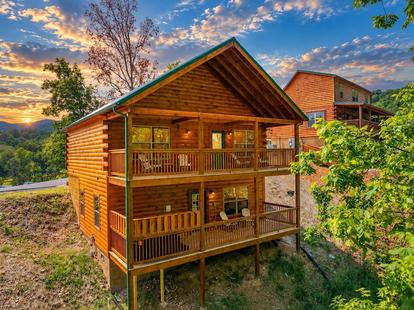
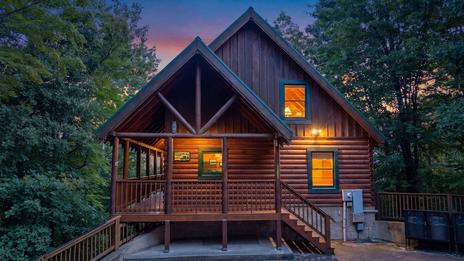
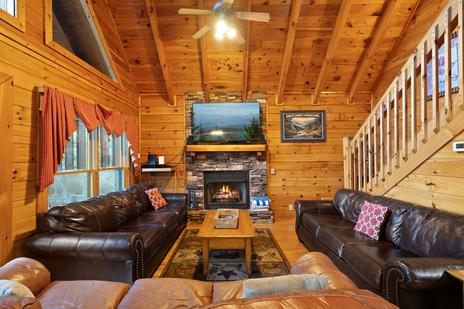
The best way to experience all of it — the people, the language, the food, and the mountains — is to slow down and stay a while. A Smoky Mountain cabin gives you a home base in the middle of it rather than a hotel room on the edge of it. Sit on the porch, talk to your neighbors, and let the place settle in.