7 Reasons to Visit the Tennessee Museum of Aviation in Sevierville
Published Dec 14, 2025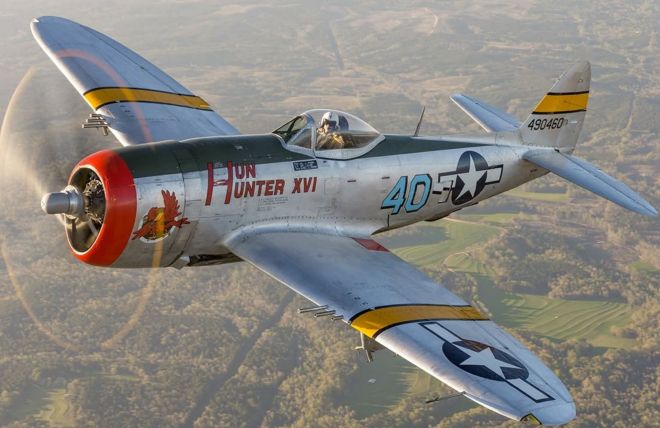
Most visitors to the Smoky Mountains corridor drive straight past the Gatlinburg-Pigeon Forge Airport without knowing what's inside. The Tennessee Museum of Aviation is one of the most consistently underrated attractions in the region — a 50,000-square-foot facility housing two of the fewer than a dozen airworthy WWII P-47 Thunderbolts remaining in the world. Here are 7 reasons it belongs on your Smokies itinerary.
About the Museum
135 Air Museum Way, Sevierville, TN 37862 | (865) 908-0171 | tnairmuseum.com
Tue–Sat 10 AM–6 PM (5 PM December–February) | Closed Sunday & Monday
Admission: Adults $12.75 | Seniors (60+) $9.75 | Children (6–12) $6.75 | Under 6 free | Military $8.75
Free parking | Air-conditioned exhibit gallery | Heated hangar in winter
1. Two Airworthy P-47 Thunderbolts — Fewer Than a Dozen Exist Worldwide
The single most compelling reason to visit. The P-47 Thunderbird was the dominant American fighter-bomber of World War II — and fewer than a dozen remain in existence anywhere in the world. The Tennessee Museum of Aviation houses two of them, both still airworthy. Walking up to a P-47 that actually flies — not a static museum piece but a machine that can and does take off — produces a different kind of encounter with history than a standard museum display.
The museum's emphasis on airworthy "Warbirds" (vintage military aircraft that fly) is the institutional philosophy that distinguishes it from most aviation museums. These aren't just preserved artifacts — they're living, maintained machines.
2. Close-Up Access to Historic Aircraft
The 35,000-square-foot hangar puts visitors within arm's reach of the collection — fighters, jets, helicopters, trainers, amphibious aircraft, and military vehicles from multiple eras. The collection spans military aviation history from World War II through Vietnam and beyond, with an F-86 Sabre, a Vietnam-era Huey, and dozens of other restored aircraft on the floor. Unlike display cases at a distance, the hangar format lets you inspect the engineering details — the rivets, the cockpit instruments, the fuel systems — of aircraft that shaped the outcome of actual conflicts.
3. The Exhibit Gallery — Uniforms, Artifacts, and the Wave Wall
The air-conditioned exhibit gallery contains thousands of artifacts from military aviation history: uniforms, weapons, vintage maps, aircraft models, veterans' personal memorabilia, and cockpit instruments from multiple eras. The centerpiece is a 52-foot "Wave Wall" tracing significant milestones in aviation history — from the pre-Wright Brothers era through military aviation's development and Tennessee's specific contributions to the field. Guests consistently report spending significantly more time in the exhibit gallery than they expected.
4. The Faith and Courage Exhibit
One of the museum's most affecting displays — an exhibit specifically dedicated to military chaplains who served in World War II, Korea, and Vietnam. The collection includes a field communion kit used in active combat conditions, a chest filled with hymnals used by troops, and personal accounts of chaplains' service alongside combat units. For visitors with family members who served, this exhibit offers a specific and unusually intimate window into the wartime experience most military history museums don't address directly.
5. A Relic from the USS Arizona
A piece of the USS Arizona's deckhouse — the ship sunk by Japan at Pearl Harbor on December 7, 1941, in the attack that brought the United States into World War II — is on display alongside an exhibit explaining its significance. The Arizona remains on the bottom of Pearl Harbor as a memorial to the 1,177 crewmen who lost their lives aboard her. The physical artifact, combined with the contextual exhibit, makes this one of the most tangible Pearl Harbor experiences available outside of Hawaii.
6. Unscheduled Flight Demonstrations
Because the museum is located on an active airport — the Gatlinburg-Pigeon Forge Airport (GKT) — vintage aircraft from the collection sometimes perform unscheduled flight demonstrations. Watching a WWII-era fighter take off from a runway visible from the museum grounds is an experience that simply isn't available at most museums regardless of their collection quality.
Demonstrations are not scheduled in advance and depend on maintenance status, weather, and pilot availability. Call the museum at (865) 908-0171 on the morning of your visit to ask about any planned flight activity that day. Visit on weekday mornings for the smallest crowds and best volunteer engagement.
7. A Genuine Break from the Parkway
The Tennessee Museum of Aviation is 10–15 minutes from downtown Pigeon Forge or Gatlinburg and consistently draws fewer visitors than any comparable attraction in the corridor. On a peak summer Saturday when the Parkway is at capacity, this museum is quiet. The knowledgeable volunteers — many of them veterans with firsthand stories to share — engage at a pace and depth that the higher-traffic attractions simply can't match.
For families with aviation enthusiasts, military history fans, or kids who simply like planes, this is one of those Smoky Mountain experiences that produces unexpected depth. Budget 1.5–2 hours for the full visit.
Frequently asked questions
How much does it cost to visit the Tennessee Museum of Aviation?
Adults $12.75, seniors (60+) $9.75, children ages 6–12 $6.75, children under 6 free, active military $8.75. Free parking. The exhibit gallery is air-conditioned and the hangar is heated in winter.
What are the Tennessee Museum of Aviation's hours?
Tuesday through Saturday, 10 AM–6 PM (5 PM from December through February). Closed Sunday and Monday. Call (865) 908-0171 or check tnairmuseum.com before your visit, as winter weather may require temporary closure.
Where is the Tennessee Museum of Aviation?
135 Air Museum Way, Sevierville, TN 37862 — located at the Gatlinburg-Pigeon Forge Airport (GKT), approximately 10–15 minutes north of downtown Pigeon Forge and Gatlinburg. Free parking on-site.
Are there flight demonstrations at the Tennessee Museum of Aviation?
Yes — vintage aircraft from the collection occasionally perform unscheduled demonstrations from the airport runway adjacent to the museum. Call the museum the morning of your visit at (865) 908-0171 to ask about any planned flight activity. Demonstrations are not scheduled in advance.
How long should I plan to spend at the Tennessee Museum of Aviation?
Most visitors spend 1 to 2 hours. The exhibit gallery alone merits significant time — the 52-foot Wave Wall and the Faith and Courage exhibit both reward careful reading rather than a quick walk-through.
Stay in a Sevierville or Pigeon Forge cabin and add the Tennessee Museum of Aviation to your itinerary — 10–15 minutes from most Colonial Properties properties in the corridor.