Fall in the Great Smoky Mountains
More than a hundred species of native trees turning at different rates down a five-thousand-foot elevation gradient — which is why fall here lasts six weeks instead of two. Color starts at the top in late September and reaches the valleys by early November.
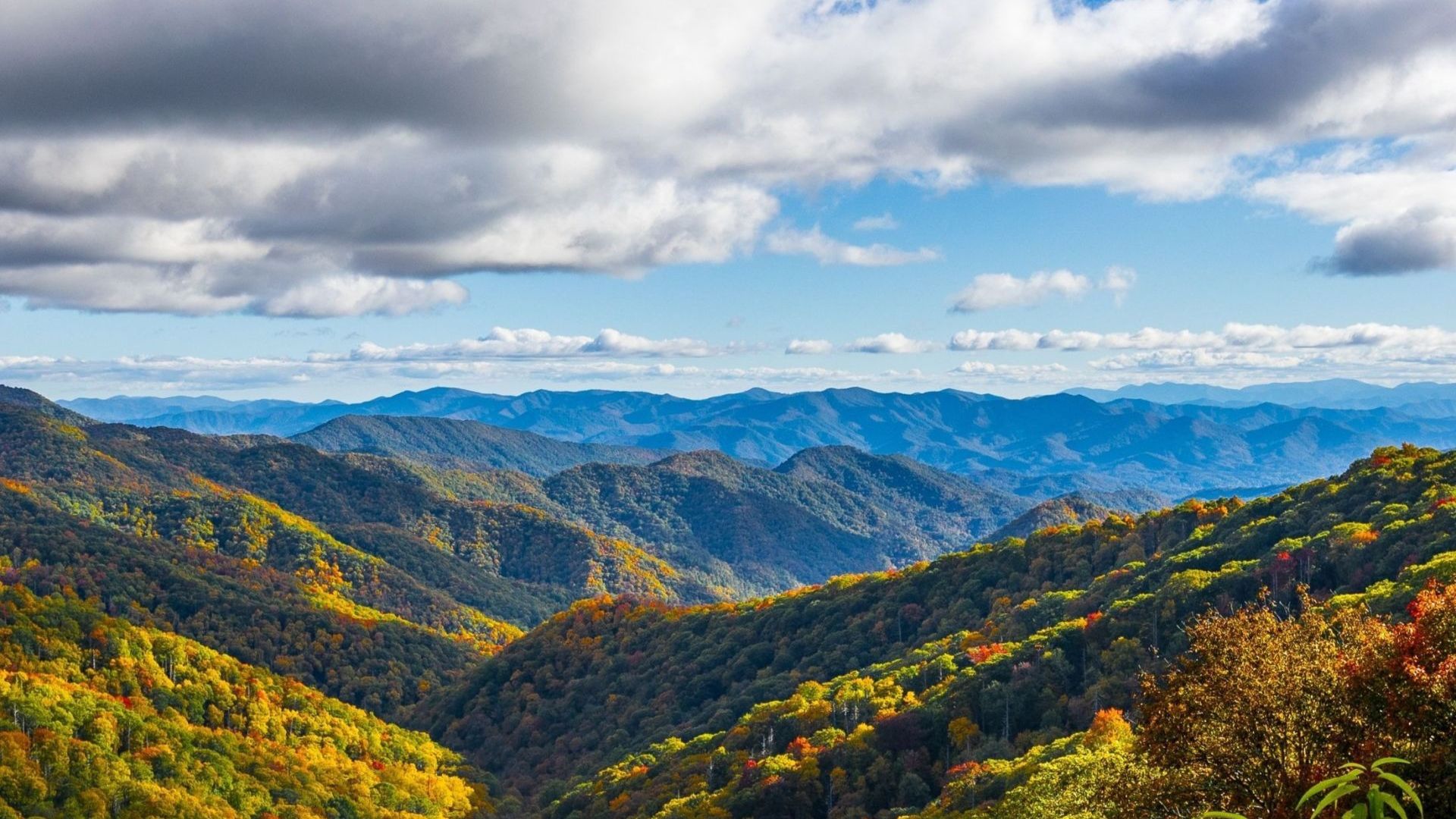
More than a hundred species of native trees turning at different rates down a five-thousand-foot elevation gradient — which is why fall in the Smokies lasts six weeks instead of two.
Color starts at the top in late September and works its way down to the valleys by early November. That means there's almost always somewhere at peak, and it means where you go matters as much as when you come.
Fall books earlier than any other season here. See fall cabin rentals and book well ahead.
When color peaks, by elevation
| Where | Typical peak | What's turning |
|---|---|---|
| High elevations (Kuwohi, Newfound Gap) |
Late Sept – mid Oct | Yellow birch, mountain ash, hobblebush |
| Mid elevations (Roaring Fork, Alum Cave) |
Mid – late Oct | Sugar maple, scarlet oak, sweetgum |
| Valleys (Cades Cove, the towns) |
Late Oct – early Nov | Hickory, red maple, tulip poplar |
It's when the mid and low elevations overlap, which gives you color from the ridgeline down to the valley floor in a single view. It's also the single busiest week of the year in the Smokies — the two facts are related.
Scenic drives
Newfound Gap Road — the classic. US-441 crosses the park north to south and climbs through every forest zone on the way, so you drive through the full progression of color in about an hour. Panoramic views at the top.
Foothills Parkway — sweeping views across the Smokies from outside the park, and particularly good at sunrise and sunset. Less trafficked than Newfound Gap.
Roaring Fork Motor Nature Trail — a narrow one-way loop near Gatlinburg through dense forest, streams, and historic buildings. Different in character from the ridge drives, and beautiful in mid-October.
Cades Cove Loop Road — eleven miles around an open valley, with color on the surrounding ridges and wildlife in the meadows. Go at first light.
The Blue Ridge Parkway begins at Cherokee on the North Carolina side of the park, so it's a natural continuation if you're crossing over — but it's a separate drive rather than part of the Smokies loop.
Hiking in autumn
The cooler air makes fall the best hiking season here, and the color adds something no other month offers.
- Alum Cave Trail — climbs toward the summit of Mount Le Conte through tunnels of foliage, with big views from the bluffs. The most popular hard-ish hike in the park
- Abrams Falls — five miles round trip from Cades Cove, ending at a twenty-foot waterfall. Note the pool below has dangerous currents; don't swim
- Laurel Falls — the easy option, largely paved, leading to an eighty-foot waterfall. Popular with families, and correspondingly busy. Check current trail status before you go, as it has undergone rehabilitation work in recent years
Trailhead parking fills by mid-morning on October weekends, and a paid parking tag is required for stays over fifteen minutes anywhere in the park. Buy it at recreation.gov beforehand.
Wildlife in fall
Autumn is the best wildlife season here. Black bears enter hyperphagia — a period of near-constant feeding before winter — which makes them more active and more visible than at any other time of year.
White-tailed deer and wild turkeys are common in the open meadows, and Cades Cove is the reliable spot for all of it. Early morning and late evening are the windows.
The park's elk herd lives at Cataloochee on the North Carolina side, roughly two hours from Gatlinburg. Fall is rutting season and the bulls are spectacular, but it's a separate day trip rather than something you'll catch in Cades Cove.
Fall festivals and events
The season brings a full calendar beyond the park itself:
- Gatlinburg Craftsmen's Fair — artisans, demonstrations, and handmade goods
- Great Smoky Thanksgiving Arts & Crafts Show — the autumn show in the Arts & Crafts Community
- Dollywood Harvest Festival — running through October with Great Pumpkin LumiNights after dark
- Anakeesta Bear-Varian Fall Festival — the mountaintop version, from late summer into November
- GatlinBURGER Week — mid-September, and a good excuse to be here before the crowds build
Planning around the crowds
October is the busiest month in the most visited national park in the country. That's worth planning around rather than being surprised by.
- Come midweek if you can. A Tuesday in late October is a fundamentally different experience from a Saturday
- Start early. Trailhead lots and the Cades Cove loop fill by mid-morning. First light solves most of it
- Consider late September or early November. The high elevations peak in late September and the valleys hold color into November — both give you real color with a fraction of the traffic
- Book months ahead. October weekends are the first thing to sell out here, often by summer
Quiet moments
The crisp air is half the appeal. A fire pit on a cool evening, a slow morning on the deck with the ridgeline turning, a picnic somewhere with nobody else around — those are the things people remember, and they don't require competing for a parking space.
Cabin fireplaces come on October 1, which lines up with the season neatly. See cabins with a fireplace and cabins with a fire pit.
Frequently asked questions
When is peak fall color in the Smokies?
It depends on elevation. High elevations peak late September into mid-October, mid elevations mid to late October, and the valleys late October into early November. Late October gives you the widest range in one view.
Is fall a quiet time to visit?
No — October is the busiest month of the year in the park, busier than summer. It's beautiful, but plan for crowds, book early, and start your days at first light.
What's the best scenic drive for foliage?
Newfound Gap Road, because it climbs through every forest zone in an hour. Foothills Parkway for wide views with less traffic, and Cades Cove for color plus wildlife.
Where can I see elk?
Cataloochee Valley on the North Carolina side, about two hours from Gatlinburg. Fall is the rut and it's genuinely worth the drive, but it's a separate day out — there are no elk in Cades Cove.
Do I need a parking pass?
Yes, for any vehicle parked over fifteen minutes anywhere in the park. Buy it in advance at recreation.gov.
When should I book a fall cabin?
As early as you can. October weekends often sell out by mid-summer, and they're the first dates to go every year. Browse fall cabin rentals.
Is early November too late?
Not at all. The valleys and lower slopes hold color into early November, rates come down from the October peak, and the crowds thin considerably. It's one of the better-value weeks of the year.
Fall is the season people plan a year around here, and the cabins go first. Browse fall cabin rentals, or start with cabins with mountain views and cabins with a fireplace — in season from October 1. Looking at the park specifically? See cabins near the national park and cabins near Cades Cove. Check the current specials, or use the vacation planner to plan the trip.