Forest Bathing in the Smokies: A Beginner's Guide
Published Sep 28, 2026
In a place famous for coasters, dinner shows, and packed trailheads, the Smokies also offer something quieter and increasingly sought-after: the chance to simply be in one of the oldest, most biodiverse forests in North America. Forest bathing — the practice of slowing down and soaking in the woods with all your senses — is a natural fit for the Smoky Mountains, and it requires no fitness, gear, or experience. Here's a beginner's guide to doing it here.
What forest bathing actually is
Forest bathing comes from the Japanese practice of shinrin-yoku, which translates roughly to "forest bathing" or "taking in the forest atmosphere." It emerged in Japan in the 1980s and has since spread worldwide. The key thing to understand: it is not hiking. There's no destination, no summit, no mileage goal, no fitness required. Forest bathing is the deliberate, slow, sensory practice of being present in the woods — walking gently (or not at all), noticing what you see, hear, smell, and feel, and letting the pace of the forest replace the pace of daily life.
If hiking is about getting somewhere, forest bathing is about being nowhere in particular, on purpose. That distinction is what makes it accessible to absolutely everyone, regardless of age or ability.
Why the Smokies are ideal for it
Few places are better suited to forest bathing than Great Smoky Mountains National Park. It protects one of the largest tracts of old-growth forest in the eastern United States — towering, centuries-old trees — within one of the most biodiverse temperate ecosystems on the planet. Add the constant soundtrack of creeks and birdsong, the soft light filtering through dense canopy, the famous mist settling into the valleys, and the sheer sensory richness of the place, and you have a forest practically designed for slow, immersive presence. The Smokies give your senses a great deal to take in — which is exactly the point.
The (gently stated) benefits
Research into forest bathing is still developing, but a growing body of studies has associated time spent slowly and mindfully in forests with real wellness benefits — reduced stress, lower blood pressure and heart rate, improved mood, and a greater sense of calm and well-being. Some research points to beneficial compounds released by trees (phytoncides) and to the simple restorative effect of unplugging in nature.
None of this is a medical treatment, and results vary from person to person — but you don't need a study to feel it. Most people who spend an unhurried hour among the trees come back calmer, clearer, and more rested. On a vacation built around go-go-go attractions, a single forest-bathing session can be the thing that actually leaves you feeling restored.
How to forest bathe: a beginner's walk-through
1. Choose a quiet, easy spot
You don't need a difficult trail — you need a peaceful one. Pick somewhere calm, gentle, and ideally near water, away from crowds. (Specific Smokies spots below.) The easier and quieter the setting, the better; this is about presence, not exertion.
2. Leave the agenda — and the phone — behind
Silence your phone or leave it in the car. Set no goal, no distance, no time pressure. Give yourself permission to move slowly or stop entirely. The single biggest shift is releasing the urge to "accomplish" the walk.
3. Slow way down
Walk at a fraction of your normal pace — slow enough that it feels almost strange at first. Pause often. There's no wrong speed as long as it's slower than you think.
4. Engage each sense, one at a time
This is the heart of the practice. Deliberately notice:
- Sight — the layers of green, the play of light through leaves, the texture of bark, the movement of water.
- Sound — the creek, birdsong, wind in the canopy, the quiet beneath it all.
- Smell — damp earth, pine, the particular scent of the forest after rain.
- Touch — rough bark, a smooth stone, cool water, moss.
- Even taste — the fresh air itself, crisp and clean.
Breathe slowly and deeply throughout. When your mind wanders to your to-do list, gently bring it back to what your senses are taking in.
5. Linger
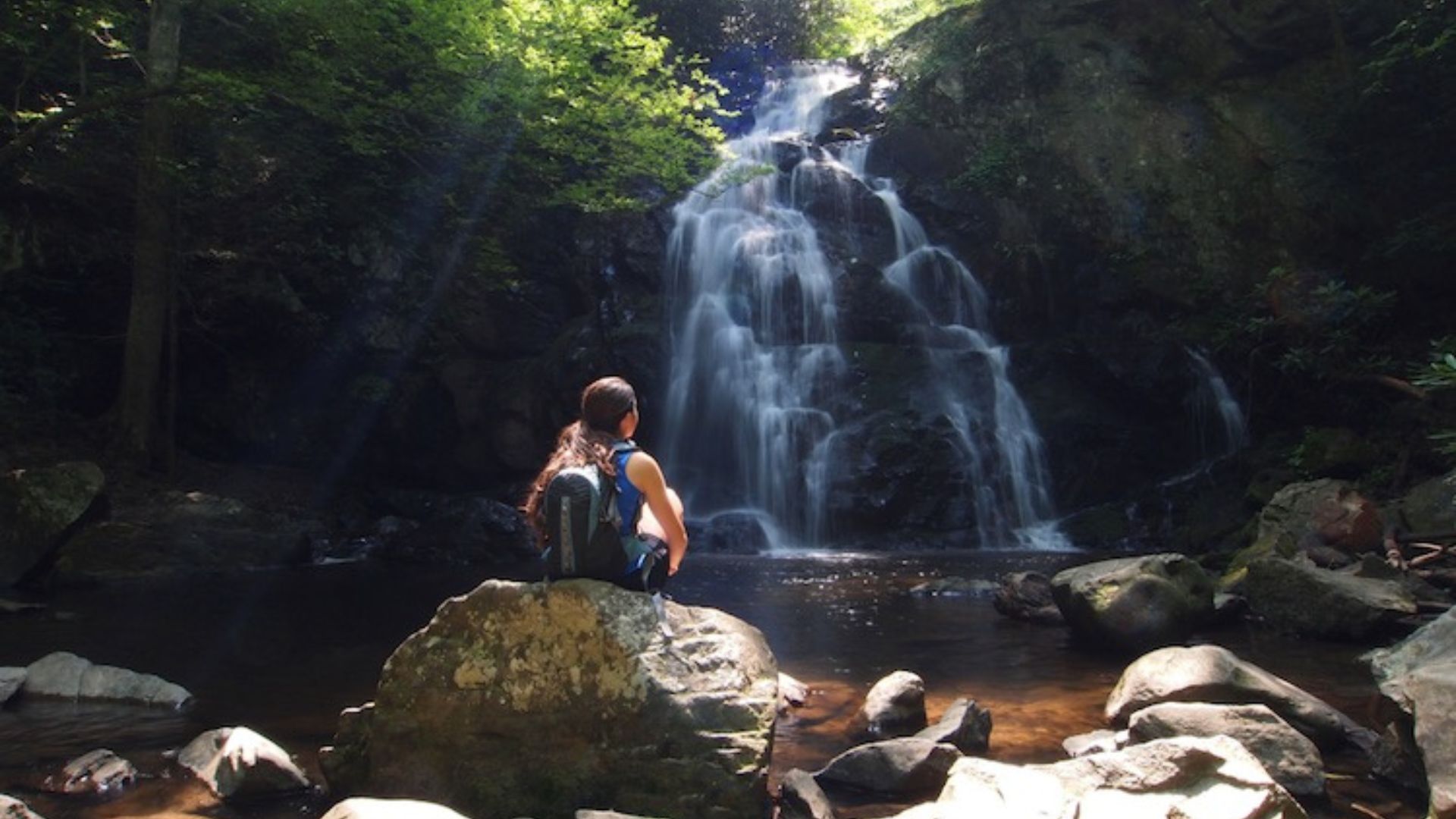
Find a spot that draws you — a creekside rock, a fallen log, a patch of sun — and simply stay a while. Sitting quietly in one place is a completely valid, even ideal, forest-bathing experience. Aim for at least an hour if you can; the calm tends to deepen the longer you stay.
Where to forest bathe in the Smokies
Look for easy, quiet, water-adjacent spots rather than the marquee strenuous hikes:
- The Gatlinburg Trail or Oconaluftee River Trail — flat, gentle, riverside paths (both also allow leashed pets), perfect for a slow sensory walk without elevation.
- The Roaring Fork Motor Nature Trail — pull off, step a few feet into the old-growth forest beside a rushing stream, and you're immersed. Quieter than the main trailheads.
- Metcalf Bottoms or a quiet picnic area — creekside spots where you can settle on a rock and simply be.
- The Cove Hardwood Nature Trail or other short nature loops — short, easy, interpretive paths through rich forest.
- Your own cabin deck or wooded lot — a genuinely great option (see below).
Go early in the day for the deepest quiet and the best chance at solitude, and choose weekdays or shoulder seasons over peak weekends. The goal is calm, so pick the least crowded option available. As always in the park, tread lightly — see our guide to Leave No Trace in the Smokies.
The easiest forest bath of all: your cabin
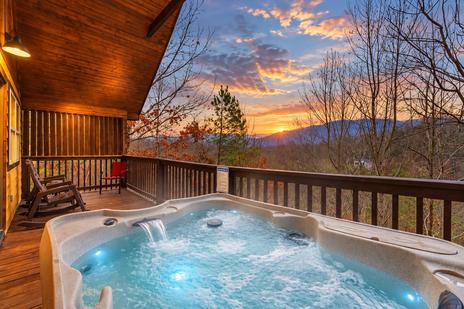
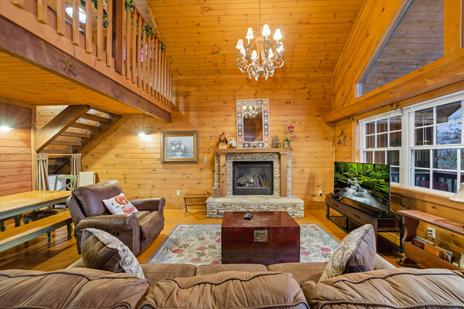
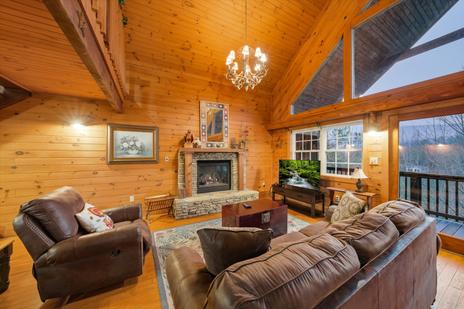
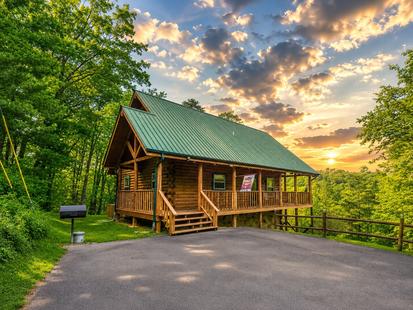
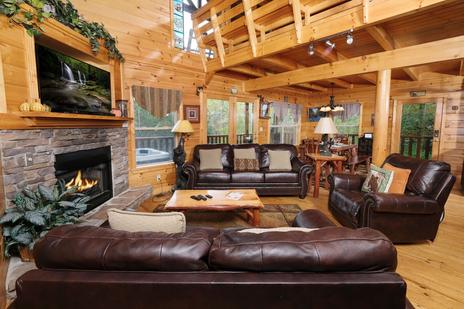
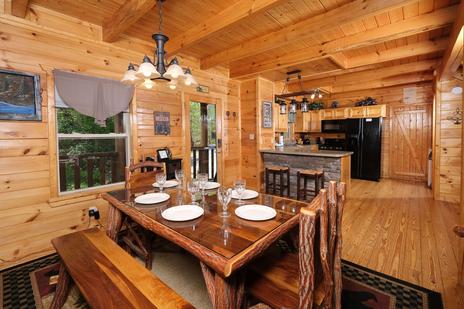
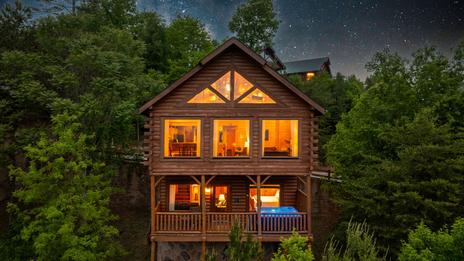
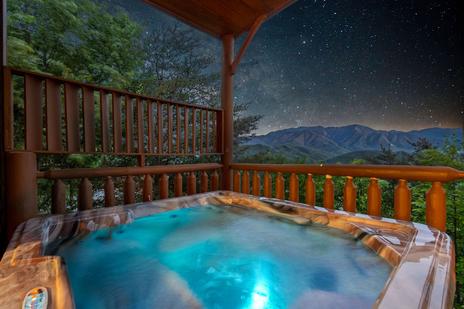
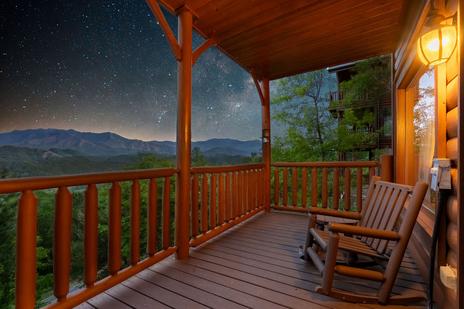
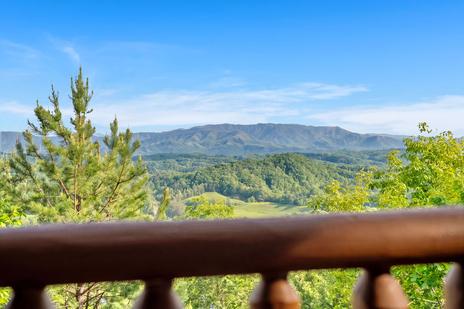
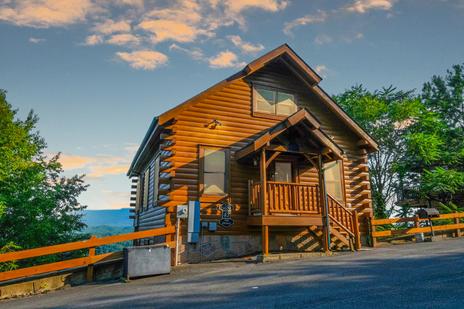
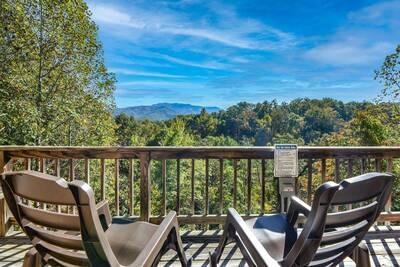
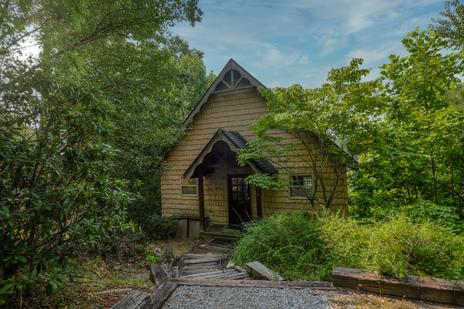
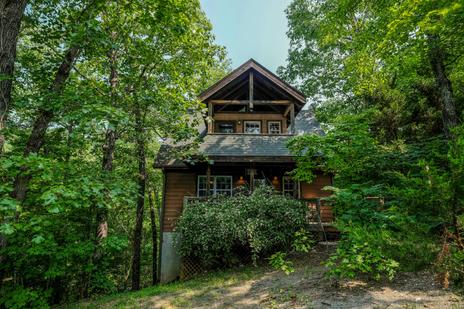
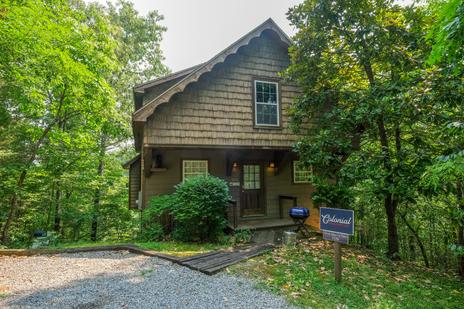
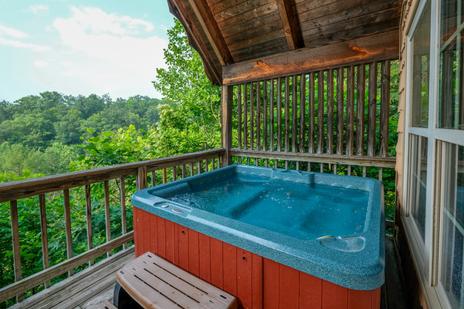
You don't even have to enter the national park. A secluded, wooded Smoky Mountain cabin is its own forest-bathing setting — step onto the deck with your morning coffee, listen to the creek and birdsong, breathe in the forest air, and you're doing it. A cabin on the river or a secluded Wears Valley cabin surrounded by trees lets you practice presence without driving anywhere — arguably the most restful version, first thing in the morning before the day begins. It's the quiet side of a Smoky Mountain vacation that a cabin makes uniquely easy. For more on the park's restorative pull, see our guide to the Smokies as a nature destination.
A few tips for a good session
- Dress for comfort and weather — layers, and shoes you can stand or sit still in comfortably. Bring rain protection; a light drizzle can actually make for a beautiful, atmospheric session.
- Bring water, skip the rest. The whole point is to carry little and do less.
- Go solo or in comfortable quiet. Forest bathing can be solitary or shared, but if with others, agree to stay mostly silent so everyone can be present.
- Don't force it. If your mind is racing at first, that's normal — the calm usually arrives as you slow down. Give it time.
- Practice basic safety. Even on easy paths, this is bear country — stay aware of your surroundings, and don't wander off-trail into dense brush.
Frequently asked questions
What is forest bathing?
Forest bathing (from the Japanese shinrin-yoku) is the practice of slowing down and immersing yourself in the woods with all your senses — not hiking to a destination, but being present and mindful among the trees. It requires no fitness, gear, or experience, which makes it accessible to everyone.
Is forest bathing just hiking?
No — it's almost the opposite. Hiking is about getting somewhere with a pace and a goal; forest bathing has no destination, no mileage, and no rush. You walk very slowly (or sit still), pause often, and focus on what you see, hear, smell, and feel. An easy, quiet path or even a single spot is ideal.
What are the benefits of forest bathing?
A growing body of research associates slow, mindful time in forests with reduced stress, lower blood pressure and heart rate, improved mood, and greater calm. The research is still developing and it isn't a medical treatment, but most people simply find they come back from an unhurried hour in the woods feeling noticeably more rested and clear.
Where can I forest bathe in the Smoky Mountains?
Choose easy, quiet, water-adjacent spots: the flat Gatlinburg Trail or Oconaluftee River Trail, a pull-off along the Roaring Fork Motor Nature Trail, a creekside picnic area like Metcalf Bottoms, or a short nature loop. Go early and on off-peak days for solitude. A secluded wooded cabin deck works beautifully too.
Do I need any special equipment or experience?
None. Wear comfortable clothes and weather-appropriate layers, bring water, and leave the rest (including your phone's attention) behind. There's no technique to master — just slow down, engage your senses, and linger. It's one of the few genuinely restorative activities that anyone can do on day one.
The most restful part of a Smoky Mountain trip might be the quiet you find among the trees. Browse Colonial Properties' secluded, wooded cabins — many with creekside settings and forest views — for a getaway that lets you slow down and breathe.